


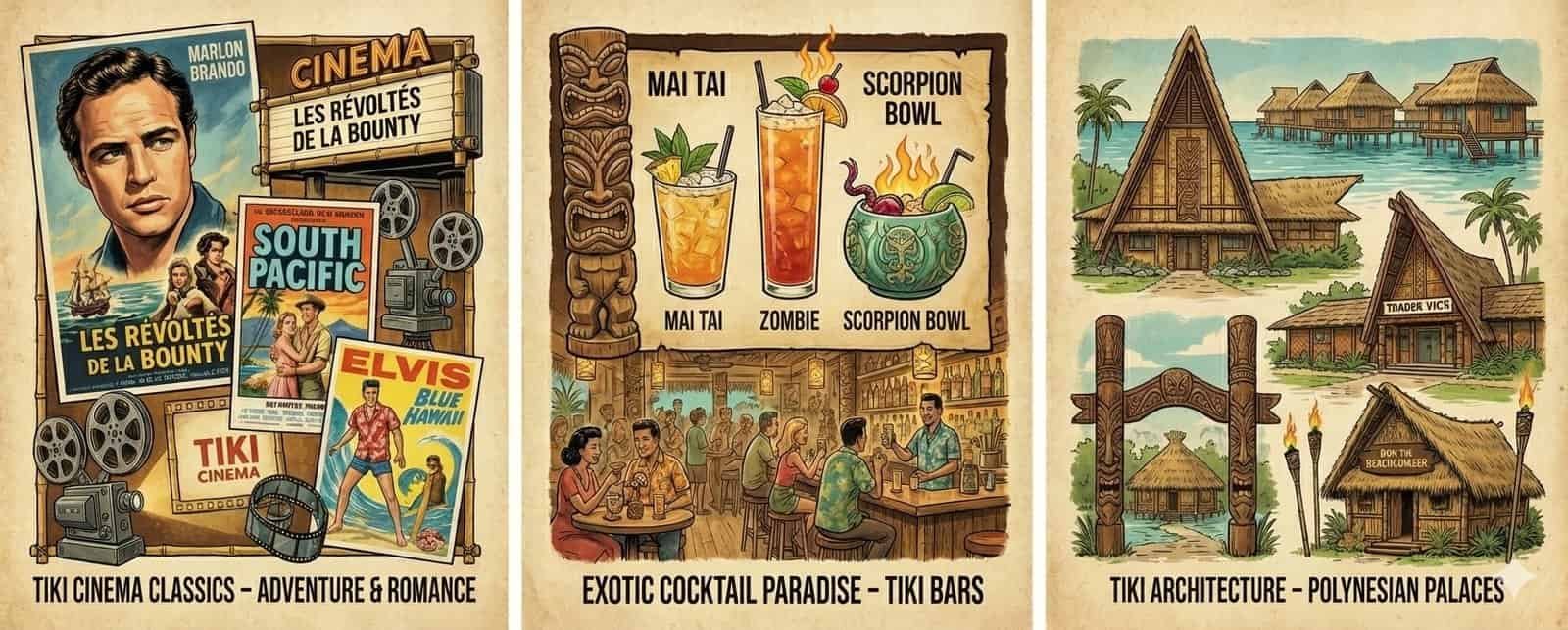
Why does Tahiti capture the imagination of the whole world? Is it because of its lagoons? Of course. But it’s also because deep down, we are all searching for the same thing: Paradise Lost.
This desire is nothing new. It has been shaped by centuries of stories, then amplified by a dream machine from California: Hollywood. Today, I invite you to untangle myth from reality. To understand how a bar in Los Angeles changed the face of tourism and how the “Bali Hai Boys,” three Californians who invented the overwater bungalow in Raiatea in 1967 to compensate for the lack of beaches, created the global symbol of escape, and how, once here, you can touch something much more powerful than cinema: the real Mana.
Polynesian culture: Mana is a key concept in Polynesia. It is a vital energy, a spiritual force that inhabits beings and things. Standing in front of an ancient Ti’i is to connect with this energy. It is an experience of profound well-being, a grounding to the earth.
The birth of the myth: from Bougainville to Don the Beachcomber
The “Tiki” phenomenon has its origins in the accounts of early explorers. When Bougainville and Cook discovered Tahiti, they saw not just an island, but what they believed to be a “New Cythera.” Later, the writings of Pierre Loti and the paintings of Gauguin would cement this image of a sensual, “primitive,” and free way of life.
But it was America that would transform this narrative into a consumer product.
The Invention of the “Tiki Bar” (1933)
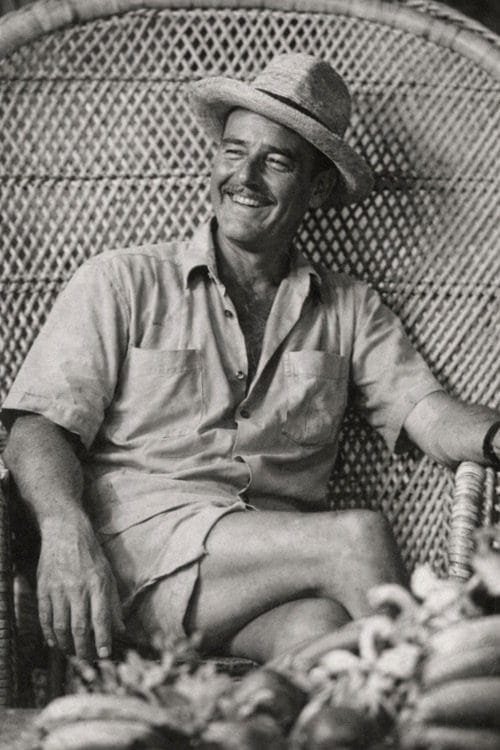
It all started with one man: Ernest Gantt, a veteran adventurer who called himself Don the Beachcomber. In 1933, at the end of Prohibition, he opened the first “Tiki” bar in Hollywood. His genius? Creating a total illusion.
He served strong rum cocktails (the famous Zombie) in a theatrical setting: fishing nets, bamboo, and carved fake idols. It was pure fantasy, but for the average American, it was the cheapest ticket to paradise.
The Golden Age of Hollywood: Escape to the South Seas
In the 1950s, America was at the height of its material glory. The average American had everything: a house, a car, money. But they also had stress, social pressure, and puritanical morals. They were suffocating.
Hollywood offered them the perfect escape: the myth of the South Seas. A world where you didn’t have to clock in at the factory and where love was free.
Three cult films have engraved this image in the global unconscious (and perhaps yours too?):
- 1. Mutiny on the Bounty (1935, 1962) :
Whether starring Clark Gable or Marlon Brando, this film sold the ultimate idea of rebellion: leaving everything behind to live on a beach with a Vahine.
🍿 The cult scene: The ship’s arrival in Tahiti, greeted by hundreds of flower-covered canoes.
👉 Watch the original trailer on YouTube
- 2. South Pacific (1958):
This musical introduced the mystical island of “Bali Ha’i,” that forbidden and magical place that beckons sailors. The song Bali Ha’i captures this bewitching call of the horizon.👉 Listen to the call of ”Bali Ha’i” on YouTube - 3. Blue Hawaii (1961) :
The pinnacle of “Tiki Pop.” Elvis Presley, a ukulele, a wedding on a raft, and the song Rock-A-Hula Baby. It’s kitschy, it’s colorful, and it defined mass tourism for decades.👉 See Elvis and the Tiki Pop style on YouTube
It was group therapy. The American Tiki was a toy, a grimacing cocktail glass to help you forget your bills.
The Bali Hai Boys, inventors of the stilt bungalow
The Bali Hai Boys were originally three Californians, all brothers from the University of Southern California fraternity, who had well-established careers in 1950s American society:
- Hugh Kelley: a lawyer in Los Angeles and sailing enthusiast. It was a trip in 1959, following a transpacific yacht race, that inspired him to escape to Tahiti.
- Jay Carlisle: stockbroker.
- Donald “Muk” McCallum: head of the family timber business.
Back to reality: the true face of Ti’i
But you, travelers to Anoe Tahiti, are not looking for a movie set. You have come in search of the real thing.
Here, forget the word “Tiki” (which is Marquesan) for a moment. In Tahiti, we talk about Ti’i. And it’s not a game.
More than just stone: an immobilized ancestor
The authentic Ti’i is not there for decoration. It is a receptacle.
Carved from basalt (volcanic rock, the blood of the earth), coral, or precious woods such as Tou (Oceanian walnut) or Miro (rosewood), it houses the Mana of an ancestor or protective god.
Unlike the smiling or comical Tikis found in American bars, our Ti’i often have:
- Hands on the stomach: Because it is there, in the gut, that emotions and knowledge reside, not in the head.
- A stretched, sometimes threatening mouth: To scare away evil spirits and protect a boundary (Tapu).
- Huge eyes: Symbolizing spiritual vision that transcends time.
The Mana: A physical experience
Standing in front of a real Ti’i in a valley, you can feel a “density” in the air. This is Mana.
It’s not magic, it’s connection. These statues remind us that we are only passing through, watched over by the demanding benevolence of those who came before us.
⚠️ My advice: If you come across a stone Ti’i in the wild or on a >Marae, do not touch it. Not only out of respect for heritage, but because the Tapu (the sacred/forbidden) is powerful. Just observe, breathe, and give thanks (Māuruuru) for the welcome.
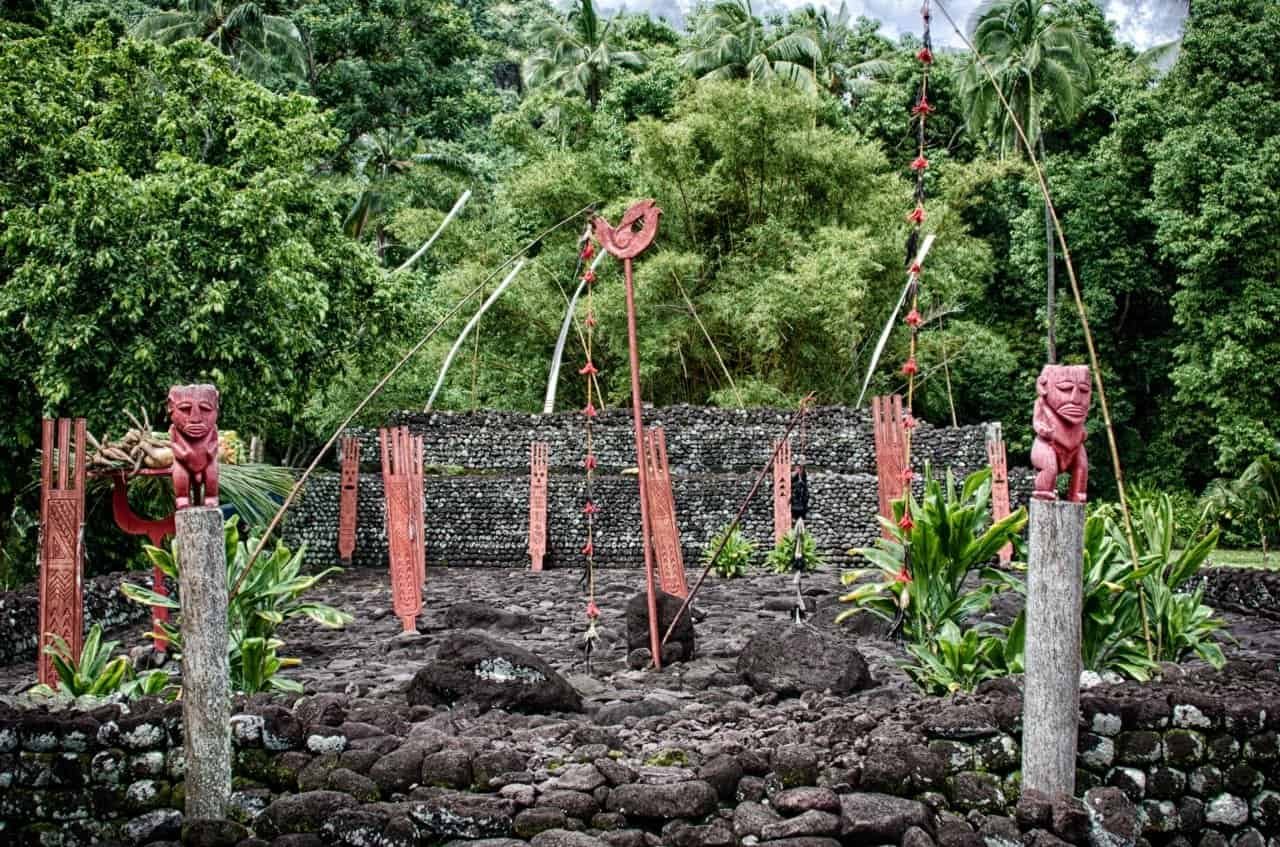
Where can you see authentic ruins in Tahiti?
If you want to swap plastic for volcanic rock and history, here are my personal recommendations for a respectful encounter.
- The Museum of Tahiti and the Islands (Te Fare Iamanaha)
- Level: Very Easy (Accessible to all, families, people with reduced mobility).
- The experience: Recently renovated, this museum in Punaauia houses priceless artifacts. You will see wooden and stone Ti’i, protected and preserved. It is the ideal starting point for understanding the diversity of styles between the Society Islands, the Austral Islands, and the Marquesas Islands.
- Anoe’s tip: Go in the morning to enjoy the cool air, and finish with a stroll through the botanical garden by the lagoon.
- Website: https://www.museetahiti.pf/
- The Marae Arahurahu (Paea)
- Level: Easy (Flat walking).
- The experience: This is undoubtedly the most beautiful restored marae (open-air temple) in Tahiti. Located in a lush green valley in Paea, the place exudes peace. You will find reproductions of Ti’i guarding the entrance.
- Impression: The natural acoustics of the valley and the darkness of the volcanic stone create a solemn atmosphere. It is a perfect place for meditation. Tahiti Tourism:
- https://www.tahititourisme.fr/patrimoine-culturel/marae-arahurahu/
- The Papenoo Valley
- Level: Intermediate (4×4 excursion or hike).
- The experience: In the heart of the island, this wild valley hides many archaeological sites. Here, nature has reclaimed its rights. The ruins are often covered with moss, blending into the forest.
- Caution: Never venture alone into the deep valley without a guide. The weather changes quickly. Tahiti Tourism:
- https://www.tahititourisme.fr/patrimoine-naturel/vallee-de-papenoo-maroto/
Which Tiki will you choose?
The Hollywood Tiki allowed the world to dream about us. It is fun, nostalgic, and part of history.
But the Ti’i from Tahiti will not only make you dream. It will make you grow.
It will reconnect you to the earth and to silence, far from the modern stress that Americans in the 1950s were already seeking to escape.
So, are you ready to turn off the TV and come feel the vibration of volcanic rock?

About the author
Ruben Chang is passionate about his homeland, his fenua, the sounds and stories that move him. Creator of tahiti-agenda.com in 2007 and front-end developer for the REDSOYU agency, he explores the cultures, technologies and stories that link the islands on a daily basis.