


‘Ori Tahiti is far more than a dance: it is an identity in motion. Inherited from the ancestors and reimagined by every generation, it blends power, precision, and emotion to tell the stories of nature, legends, and the memory of the fenua. Through our two videos, the two-time Heiva i Tahiti Best Dancer, Manuel Aie, embodies this richness through the rhythmic strength of the ‘ōte’a and the narrative softness of the aparima, while troupe leader Tauhere Sandford breaks down the steps and their symbolism.
Today, ‘ori Tahiti shines far beyond the islands, carried by major events such as Heiva i Tahiti and Hura Tapairu, and by artists who pass this culture on internationally. Understanding this dance is not only about admiring a performance: it is stepping into a living culture, a deep relationship with nature and history, and discovering the soul of a people through movement.
‘Ōte’a: the Power of Rhythm
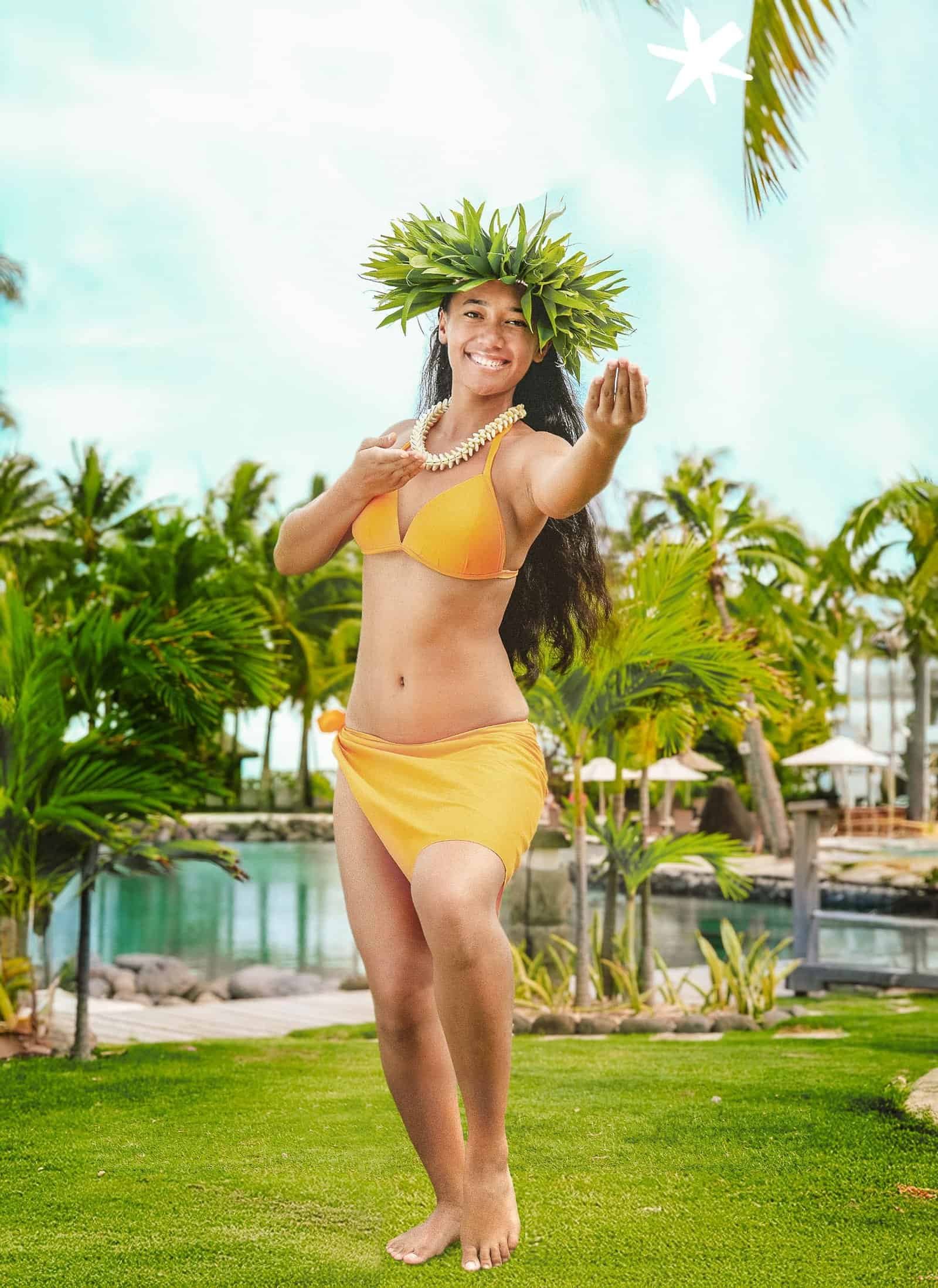
The ‘ōte’a is the most explosive expression of ‘ori Tahiti. Driven by fast percussion, this dance is built on hip precision and complete control of rhythm.
For vahine (female dancers), the movements are fast, technical, and demanding. The tāmau, the varu, and controlled hip vibrations require years of training. For tāne (male dancers), the energy is more earthy—grounded and martial.
In the video, Manuel Aie embodies this power with remarkable precision. Behind the speed lies absolute discipline. Each movement is not only aesthetic: it answers the drum, it dialogues with the rhythm.
Aparima: Storytelling Through the Hands
Unlike the ‘ōte’a, the aparima is a narrative dance. Here, the hands become language. They tell a story, describe a scene, and evoke a feeling.
The gestures are broader, more fluid, and softer. The gaze, posture, and intention become essential. In our video, Manuel Aie expresses this sensitive dimension of ‘ori Tahiti: sharing, emotion, and transmission. Aparima is the poetic soul of Tahitian dance—each gesture carries meaning.
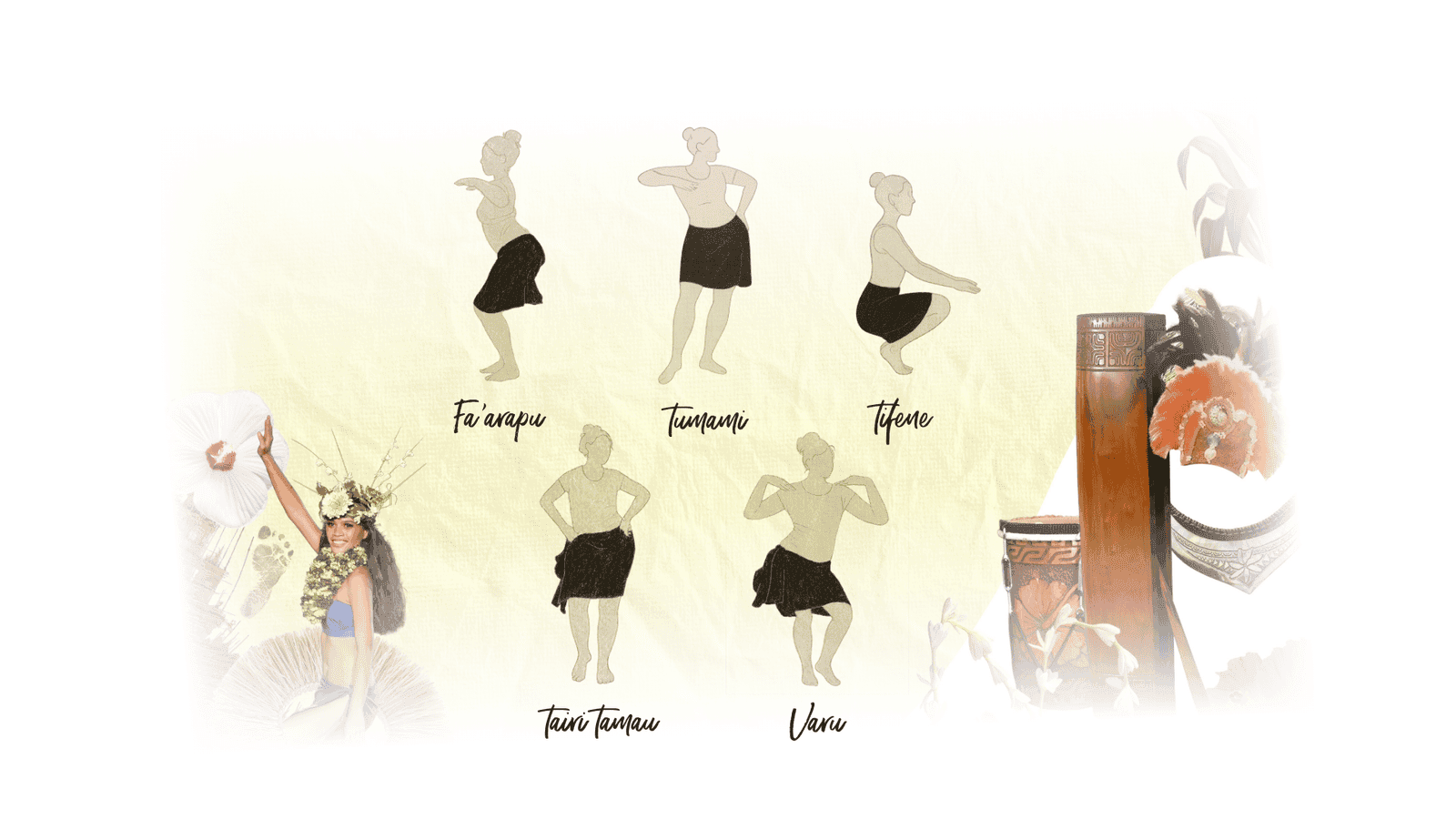
Beyond the dance itself, the costumes and instruments alone remind us why ‘ori Tahiti is far more than a show.
The adornments—entirely made from natural materials such as purau, pandanus, niau, feathers, seeds, and flowers—are the result of collective work, often carried by an entire troupe and even by loved ones. Cutting, weaving, assembling, adjusting: hours, sometimes days, of preparation to create costumes that are both delicate and able to withstand the intensity of the dance. Ephemeral yet powerful, they embody the spirit of the Heiva: a living, communal art form, deeply connected to nature.
And then there is rhythm—the true heartbeat of the fenua. Without the to’ere, the pahu, the fa’atete, the vivo, or the pū, the dance would not exist: the body answers the drum, movement is born from sound. Together, costumes and percussion form a complete language—visible and audible—that tells Tahiti in another way. A heritage made by hand, passed on as a group, and felt right down to the skin, from the very first drumbeat.

À propos de l’auteure
Brune Vazquez, directrice artistique et rédactrice pour l’agence REDSOYU.