


In Polynesia, a flower doesn’t stay on the branch. It’s picked at dawn, tucked behind an ear, woven into a crown, given at arrivals and farewells. It scents the oil, the house, the skin. Seven of them turn up everywhere, on the leis and along the roadsides. Some have always been here, others came by canoe or by ship. Here’s how to know them, and what they carry.
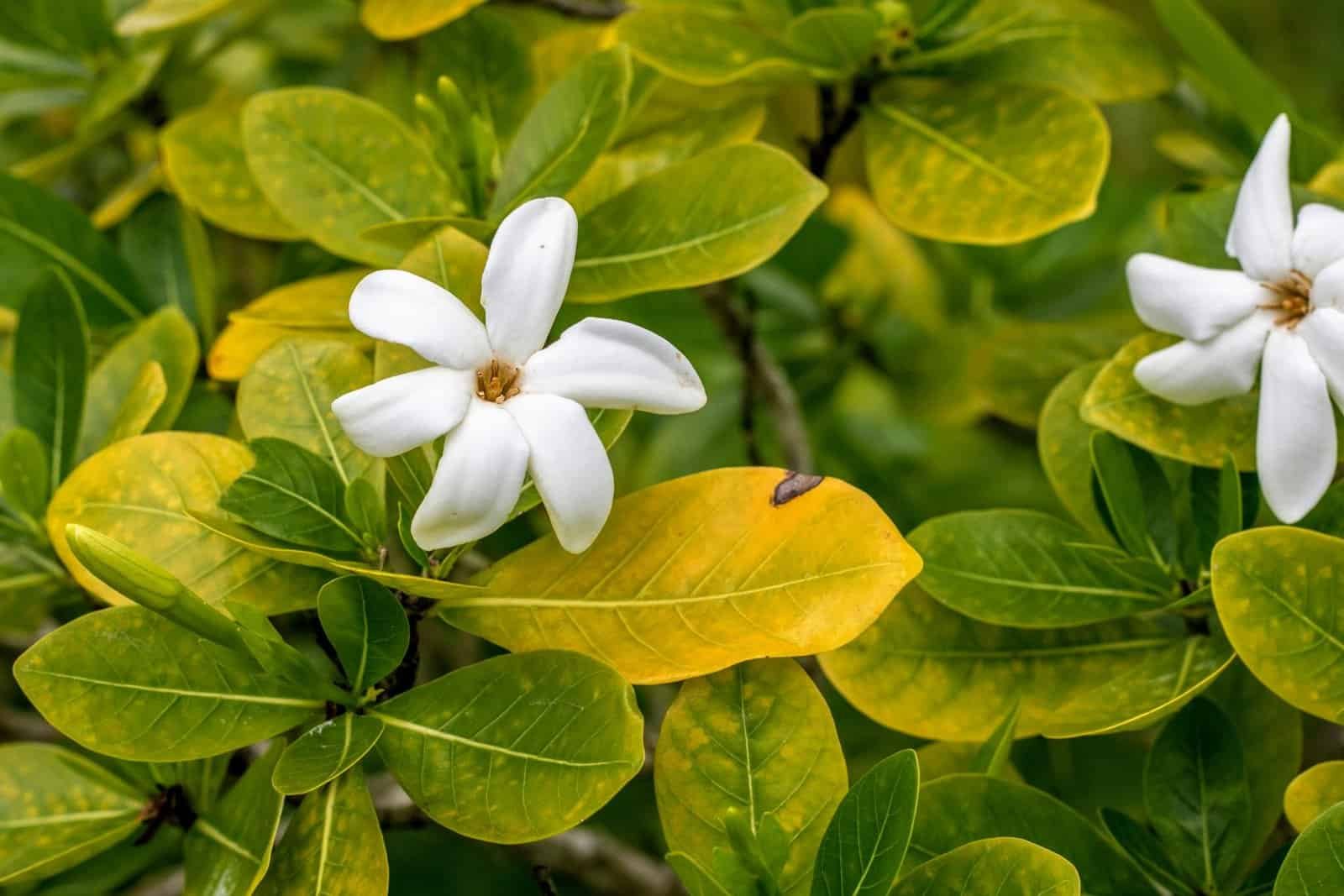
Tiare Tahiti
The emblem flower of the fenua
Gardenia taitensis
A white star of six or seven petals, set on dark, glossy green leaves. The bud opens in the morning, lasts a day, and perfumes the air far beyond its bush.
It’s the flower held out to you on arrival. The one in the crowns, the leis, and the monoï — flowers left to steep in copra oil. Worn behind the ear, it says something: on the right, the heart is free; on the left, it’s taken.
Here’s what few people know: despite its name, the tiare Tahiti is not native to Tahiti. The herbarium of French Polynesia lists it as an ornamental plant brought by the Polynesians. The emblem of the fenua arrived by canoe, like the people who wear it.
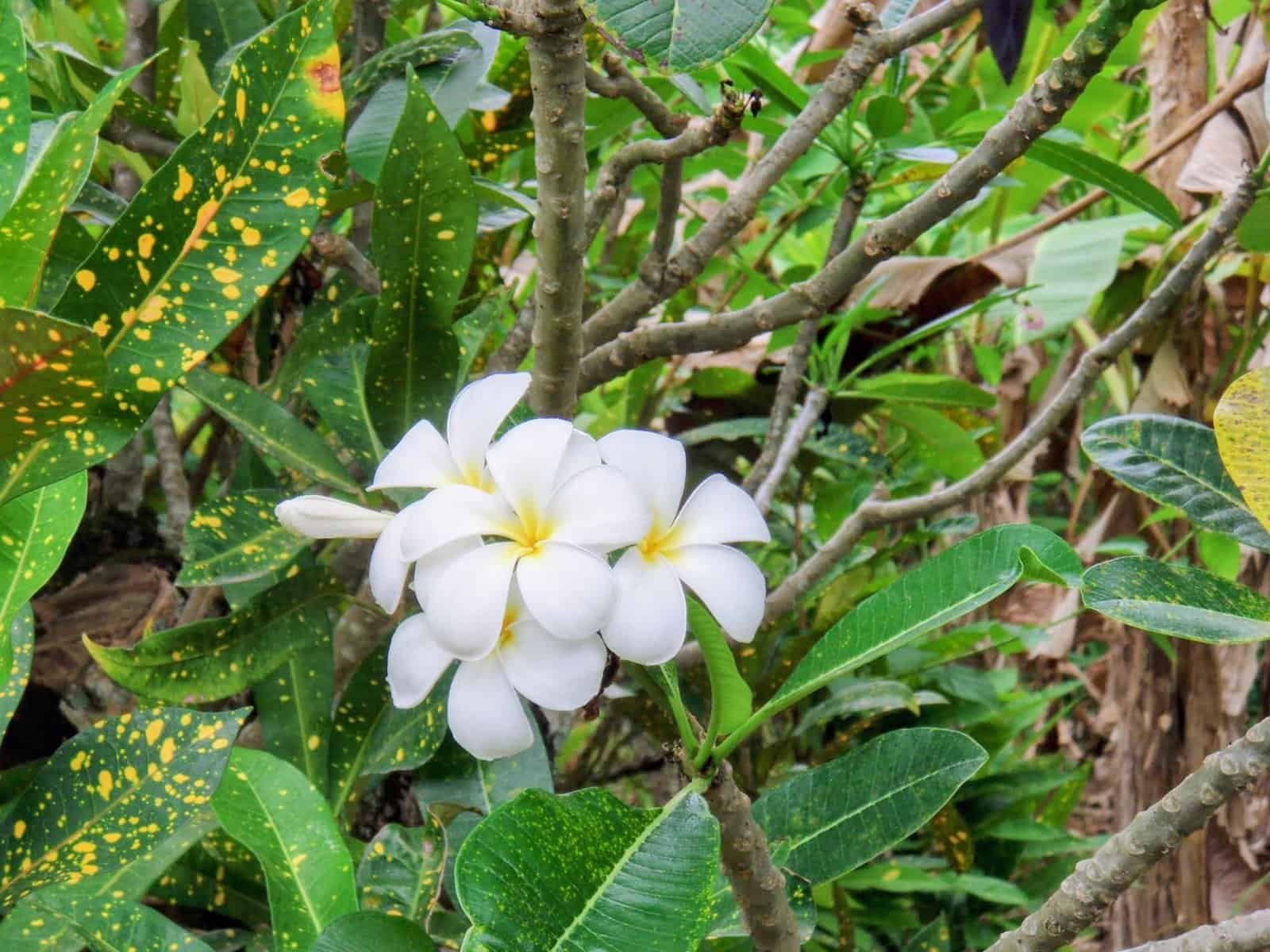
Tipanie
Frangipani
Plumeria rubra
Five thick petals overlapping like a pinwheel — white, yellow, pink or red depending on the variety — with a center that often leans yellow. The tree itself is stocky, with bare grey branches that fork as they divide.
Its scent rises most at the end of the day. The flower lasts a long time once picked, which makes it, with the tiare, one of the queens of the crown.
The name “tipanie” is the one you hear everywhere on the fenua. It’s a living everyday name, even if it doesn’t appear in the old herbarium records. The plant itself comes from tropical America and only arrived here in European times.
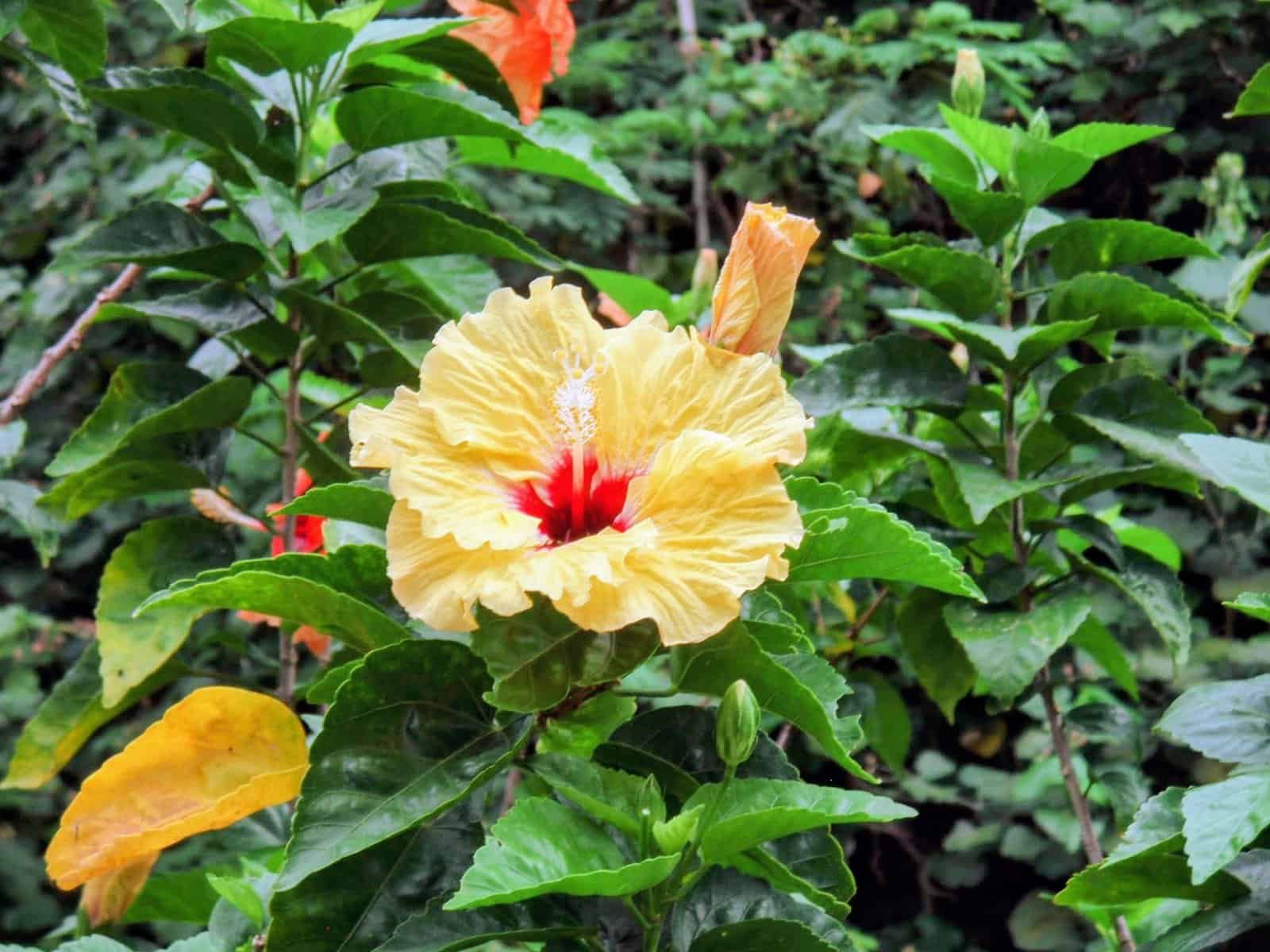
’Aute
Hibiscus
Hibiscus rosa-sinensis
A wide five-petaled bloom, most often red, but also pink, orange or yellow. At its center, a long column of stamens reaches out of the flower and curves back. The bloom lasts only a day, and the shrub keeps making more.
Watch for a lovely quirk of language. In reo Tahiti, ’aute also names the paper mulberry — the shrub whose bark was beaten to make tapa cloth. The herbarium records the very same word for both plants on Tahiti. One name, then, for the flower worn at the ear and for the tree that gave the cloth.
Another surprise: the hibiscus didn’t arrive with European ships. The herbarium lists it among the ornamental plants brought by the Polynesians. It too made the journey by canoe.
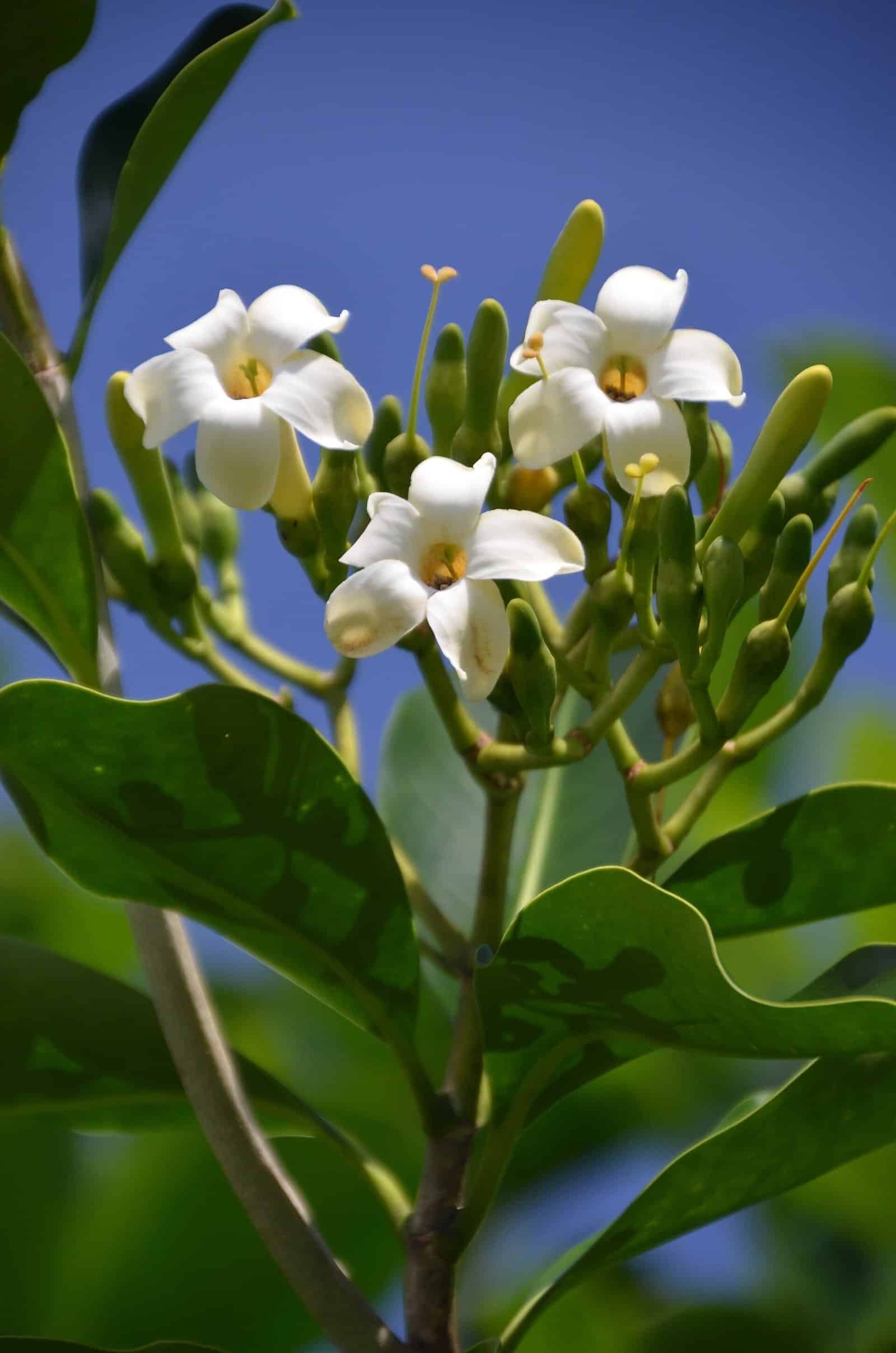

Pua
Also called hauou
Fagraea berteroana
Long tubular flowers that open into five white lobes, with a throat that turns orange as they age. The leaves are thick and glossy, and the tree often grows sideways, leaning on its neighbors.
The scent is strong, sweet, and carries far in the evening. It’s a flower for crowns and leis, sought after because it lasts and stays fragrant for a long time.
Unlike the tiare and the hibiscus, the pua is at home here: it’s native. But it has its demands. The herbarium records it on no island of the Tuamotu or the Gambier — it’s a plant of high islands, of ridges and valleys. On an atoll, don’t look for it.
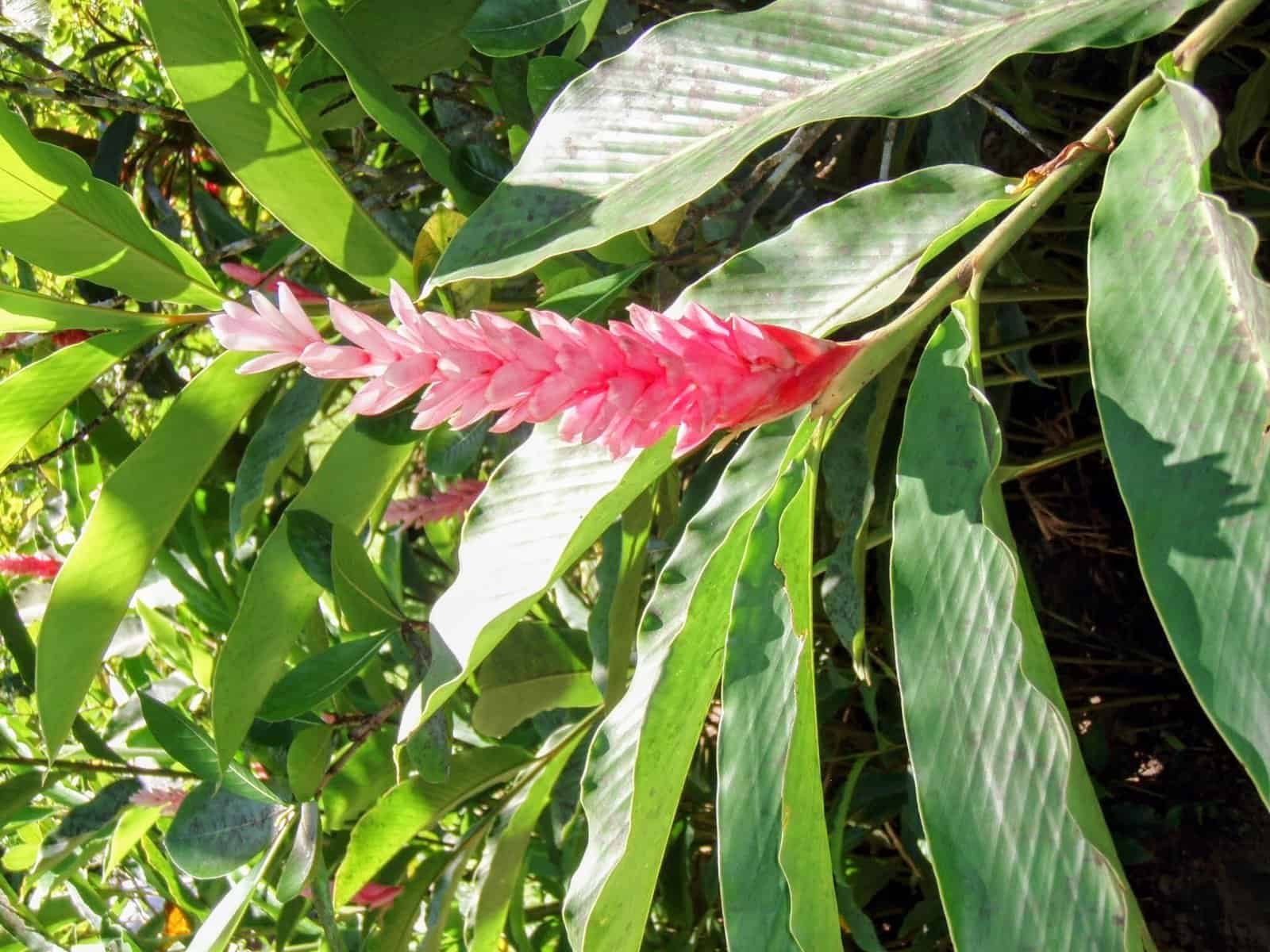
’Opuhi
Red ginger
Alpinia purpurata
You can’t miss it. An upright spike of vivid bracts — deep pink, red or white depending on the variety — carried at the tip of a leafy stem. Small white flowers, quick to fade, tuck between the bracts. The long, glossy leaves recall a banana’s.
It’s a queen of the fenua’s arrangements: crowns, leis, dance costumes, stage decor. You’ll see it at the Heiva and in the Miss Tahiti pageants, where the dancers wear it.
An honest note: “’ōpuhi” is the common everyday name for this plant on the fenua, now one of the floral icons of Tahitian culture. Yet it comes from elsewhere — a relatively recent introduction, native to the Pacific islands. In the old herbarium records, the same name could also belong to other gingers of the fenua.
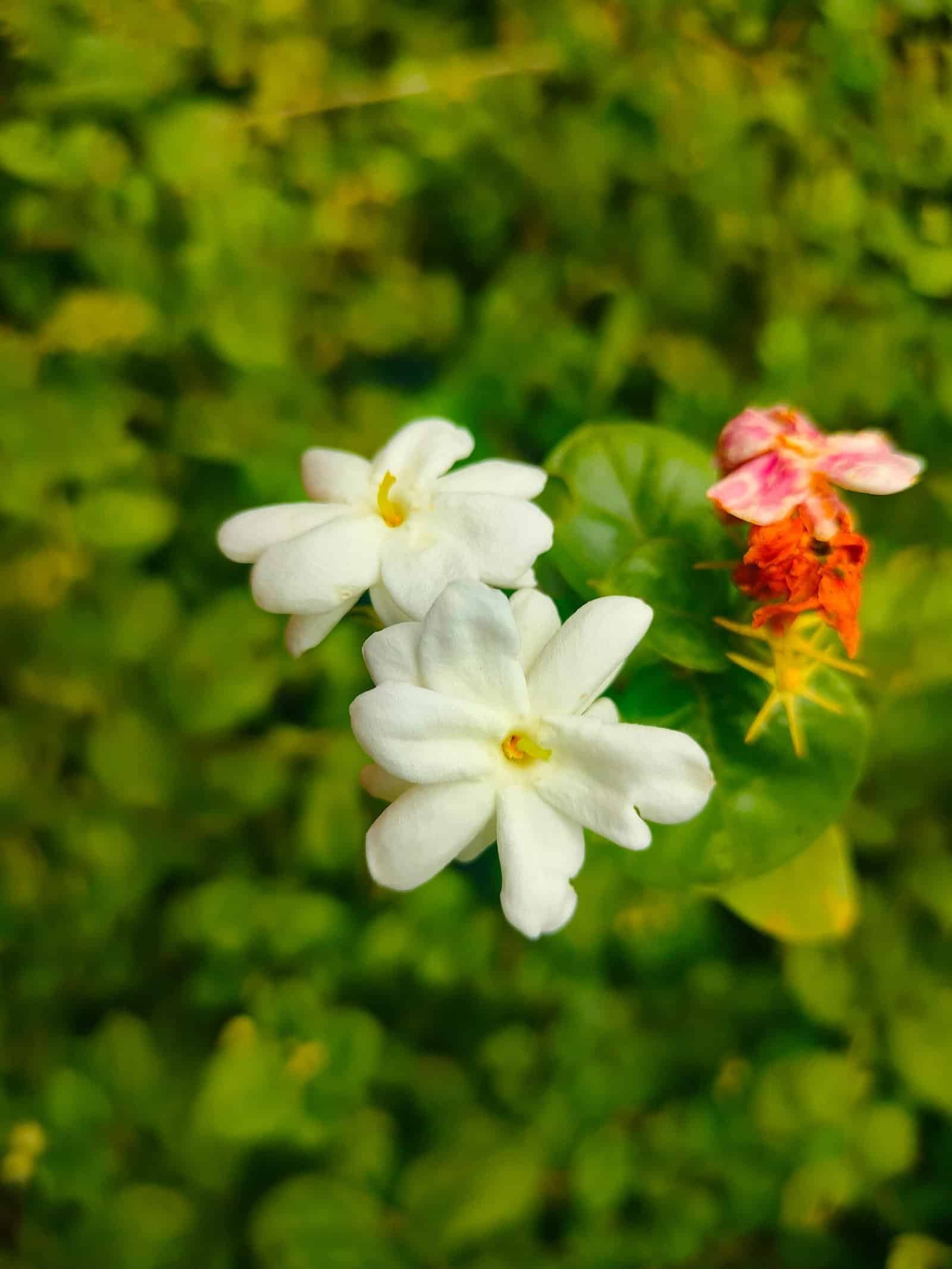

Pitate
Arabian jasmine
Jasminum sambac
Small white waxy flowers, often double, on a climbing shrub with dark green leaves. They brown quickly once picked, but their scent is enormous for their size.
The pitate slips into crowns, mixes with the tiare, scents the leis. It’s a quiet flower you smell before you see.
Like the tipanie, “pitate” is a living everyday name rather than one recorded by the herbarium. Not to be confused with the native jasmine of the fenua, a different species, known in reo Tahiti as tafifi or ti’ati’a mou’a.
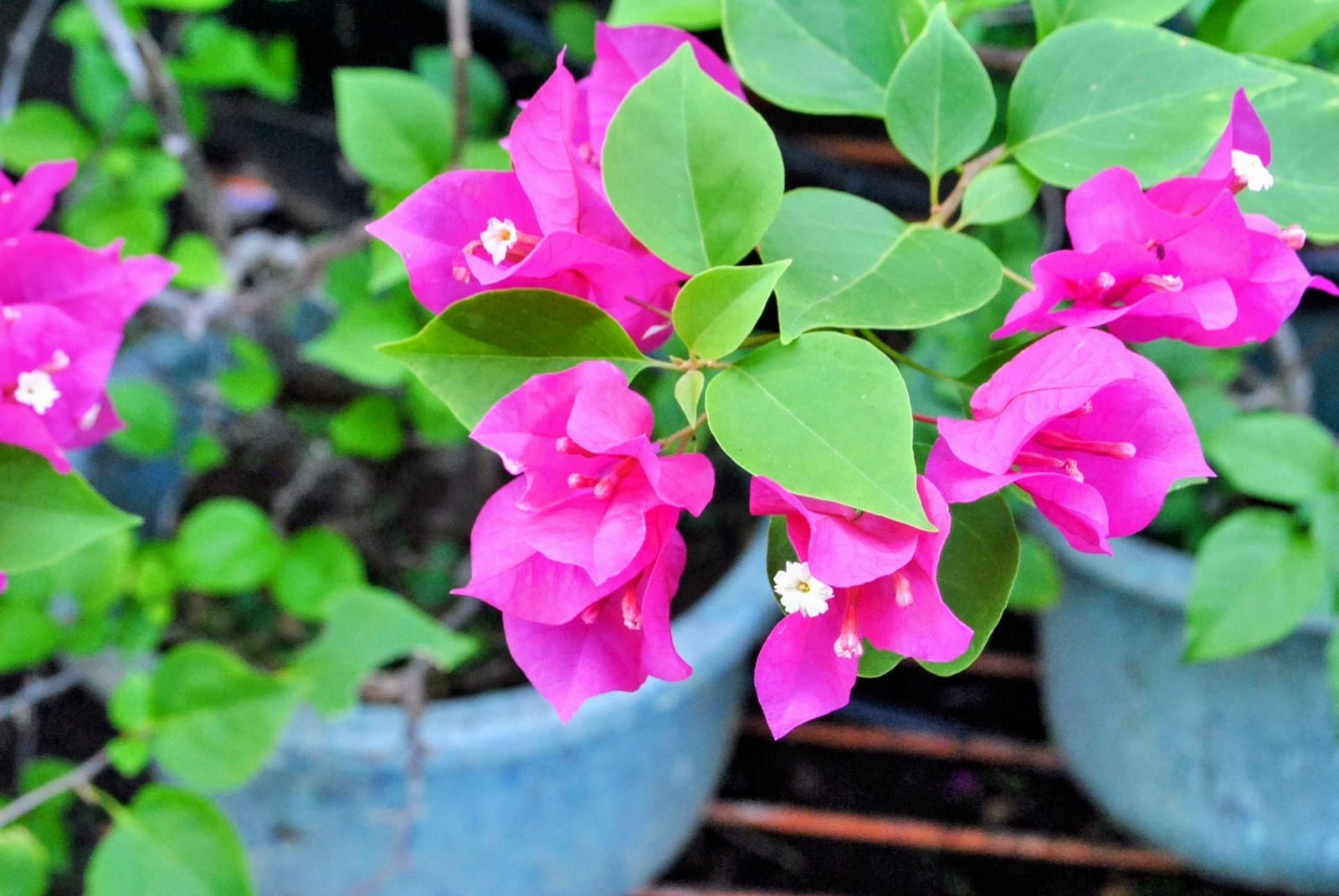
Bougainvillea
No recorded reo Tahiti name
Bougainvillea spectabilis
Those big splashes of magenta, purple or orange spilling over the walls aren’t petals. They’re bracts — colored leaves. The real flower is tiny, white and hollow, hidden at the center of each group of three.
The plant climbs, grabs on, shrugs off salt and sun, and has thorns. It handles drought better than most other flowers on this page, which is why you’ll find it all the way out on the atolls.
It’s the only one of the seven with no reo Tahiti name in the herbarium. A late arrival from South America, it never had time to enter the language — but it has more than earned its place in the landscape.
Keep exploring
- The emblematic trees of French Polynesia — the uru, the tamanu, the mape and the rest.
- The dances of Polynesia — where the crowns come into their own.
- The great Tahitian legends — the stories of the fenua.
The best way to know these flowers is to smell them. Morning markets, crown-weaving workshops, monoï-making, gardens to visit: discover and book your activities on Anoe.
Sources and credits
Reo Tahiti names, status and island distribution from the Nadeaud botanical database of the Herbarium of French Polynesia (Chevillotte H., Ollier C. & Meyer J.-Y., 2019). Scientific names and families verified in World Flora Online.
Photographs under free license via Wikimedia Commons, except where noted. Credit shown under each image.

About the author
Ruben Chang is passionate about his homeland, his fenua, the sounds and stories that move him. Creator of tahiti-agenda.com in 2007 and front-end developer for the REDSOYU agency, he explores the cultures, technologies and stories that link the islands on a daily basis.