


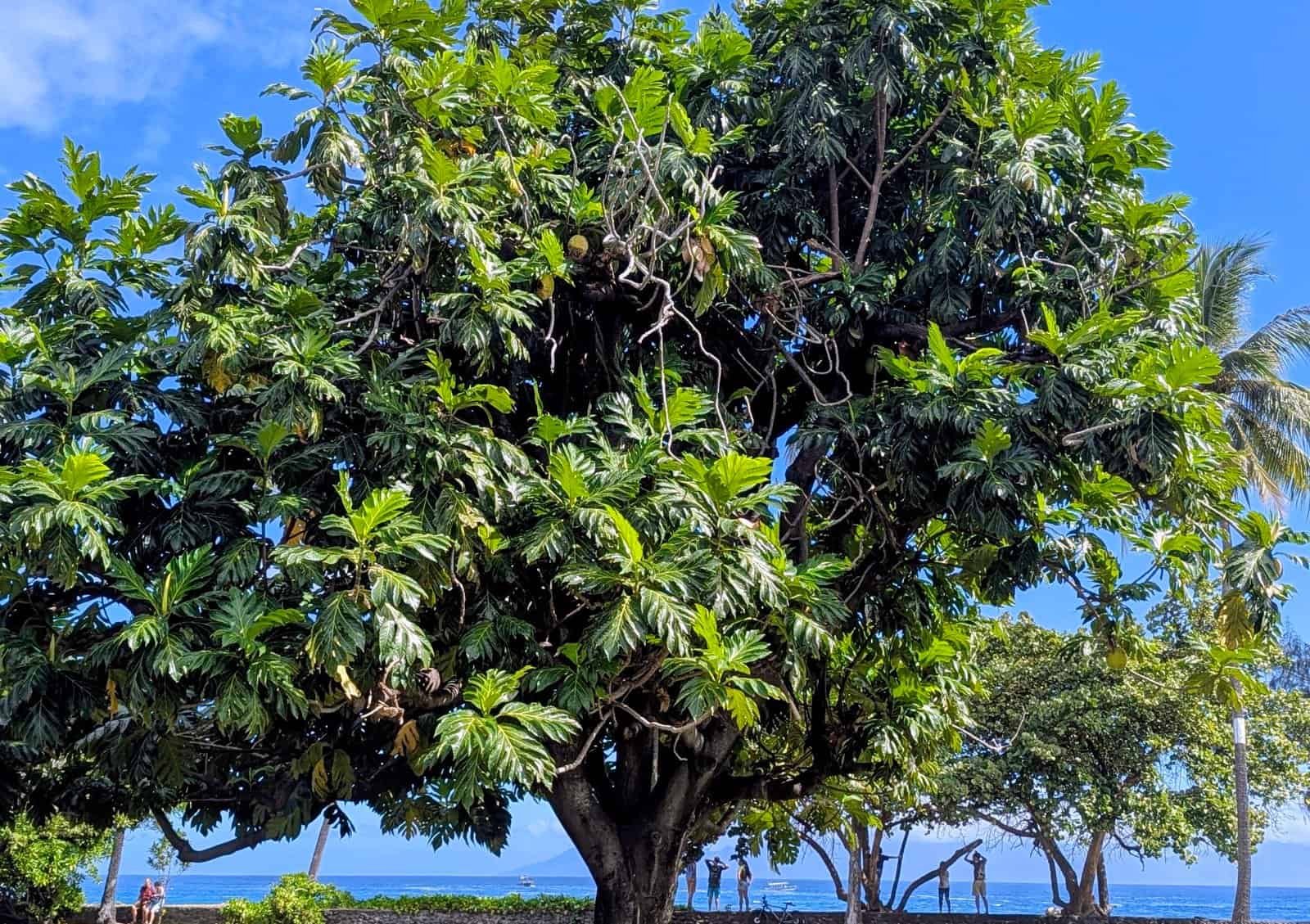
On the fenua, a tree is never just scenery. It has fed people, carried them, healed them, sheltered them. Some crossed the ocean by canoe, packed into the hulls with the families setting out to find an island. Others were already here, long before. Seven of them tell Polynesia better than any guidebook. Learn to know them, and an ordinary walk along the road stops looking the same.
Uru
Breadfruit
Artocarpus altilis
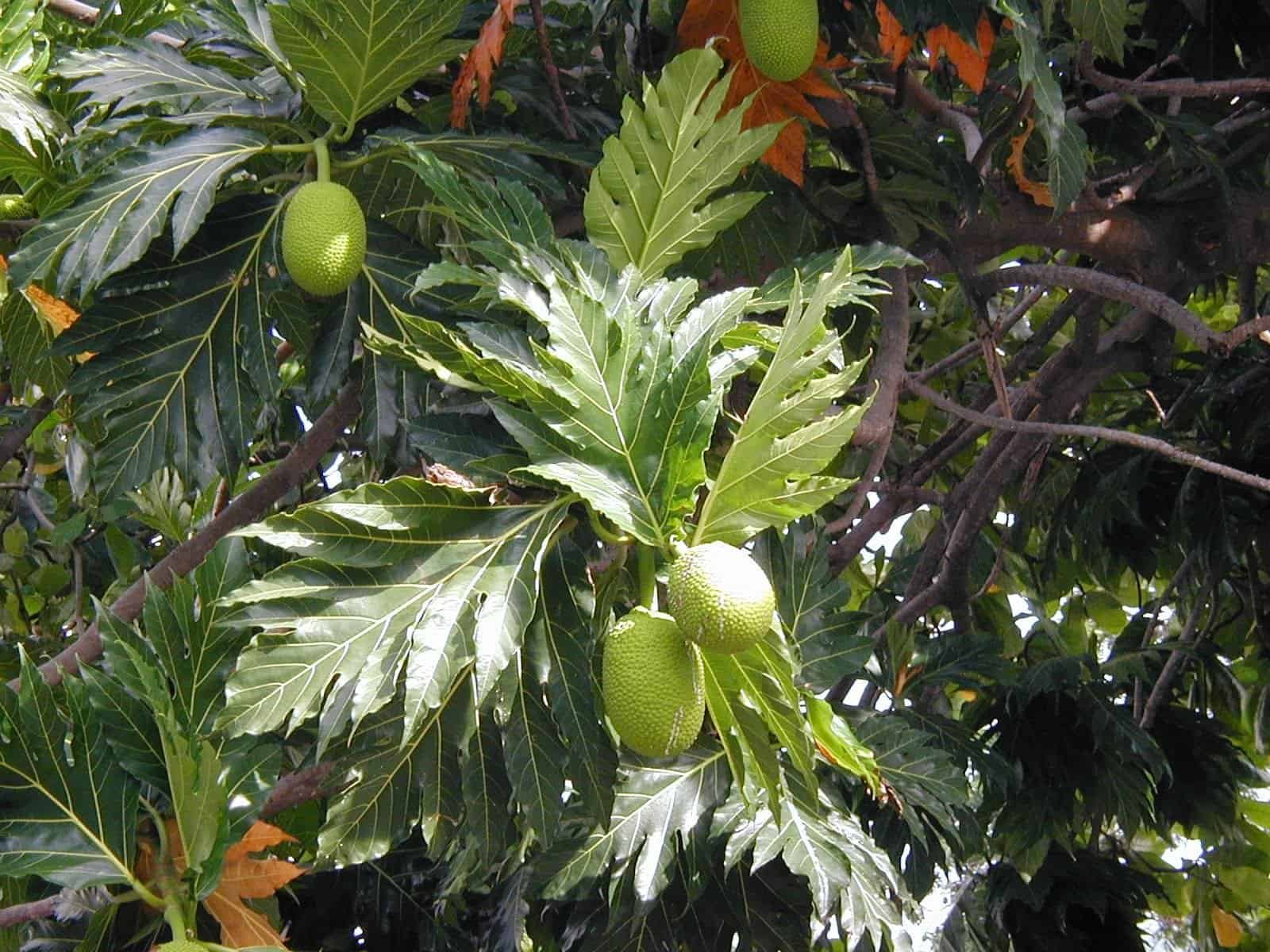
You’ll spot it by the leaves: huge, cut into broad lobes, a deep green that catches the light. And by the round, green, pebbly fruit hanging straight off the branches.
The uru didn’t grow here on its own. It came by canoe with the first migrations, out of the New Guinea region. A traveler’s choice — you don’t carry a tree at random when space is tight.
It’s eaten boiled, roasted, cooked over embers or slow-steamed. It was once fermented in stone pits to carry people through lean seasons. Its light, strong wood went into canoes, furniture, musical instruments. In Polynesian culture the uru still stands for abundance and generosity — the tree that keeps anyone from going hungry.
Ha’ari
Coconut palm
Cocos nucifera
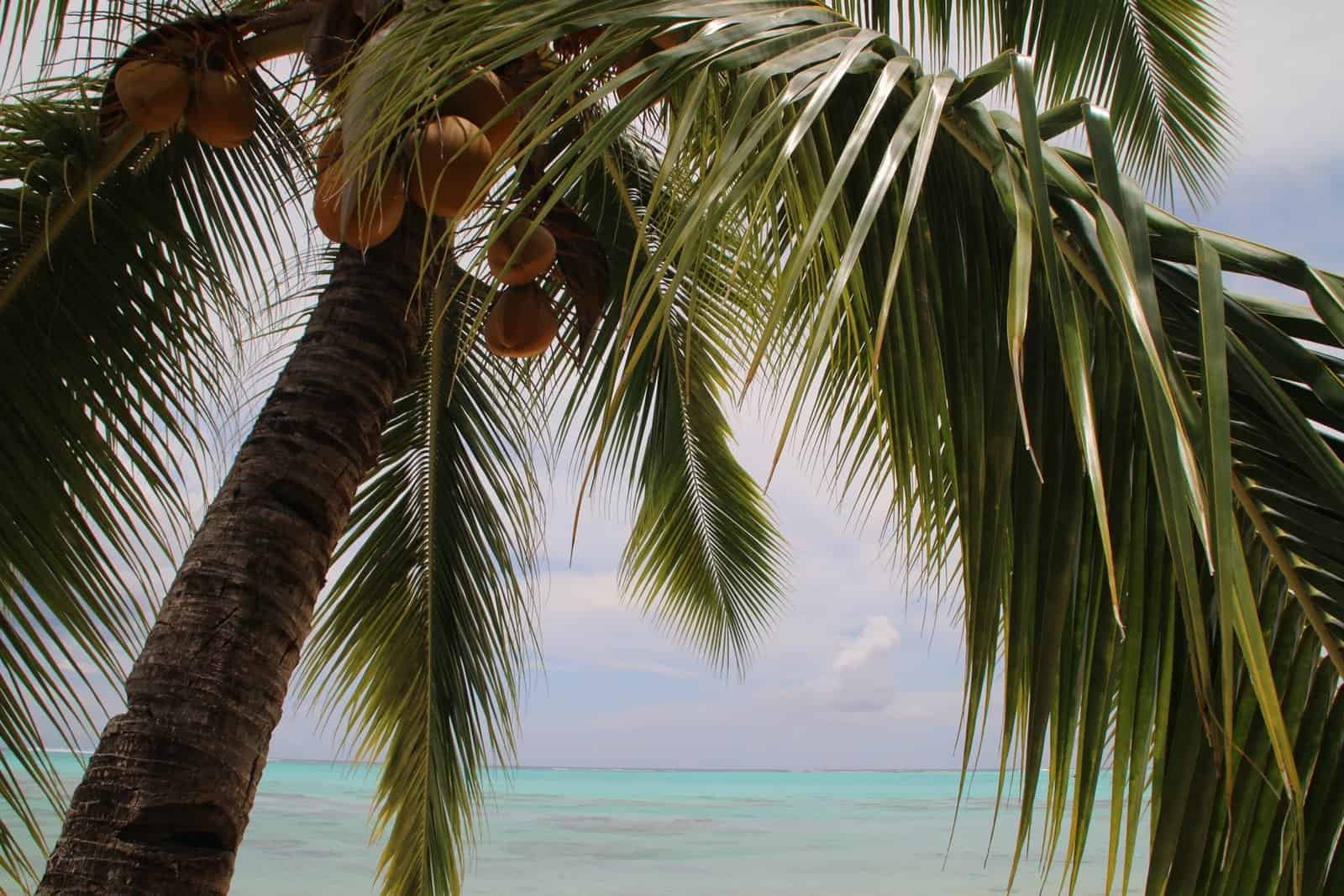
It’s the most widespread tree on the fenua. The herbarium of French Polynesia records it on fifty-five islands, from the motu of the Tuamotu to the valleys of the high islands. Nothing else reaches as far.
And nothing goes to waste. The water is drunk, the flesh is eaten, the copra gives the oil at the base of monoï. The fronds are woven into baskets, roofs, hats. The trunk builds. The husk lights fires and makes rope.
It bears all year, with no season. Maybe that’s why you stop seeing it — it’s too present, all the time. Take a minute to look up.
Ra’iatea even gives it a day of its own — read: World Coconut Day on Ra’iātea.
.jpg)
Purau
Beach hibiscus
Hibiscus tiliaceus
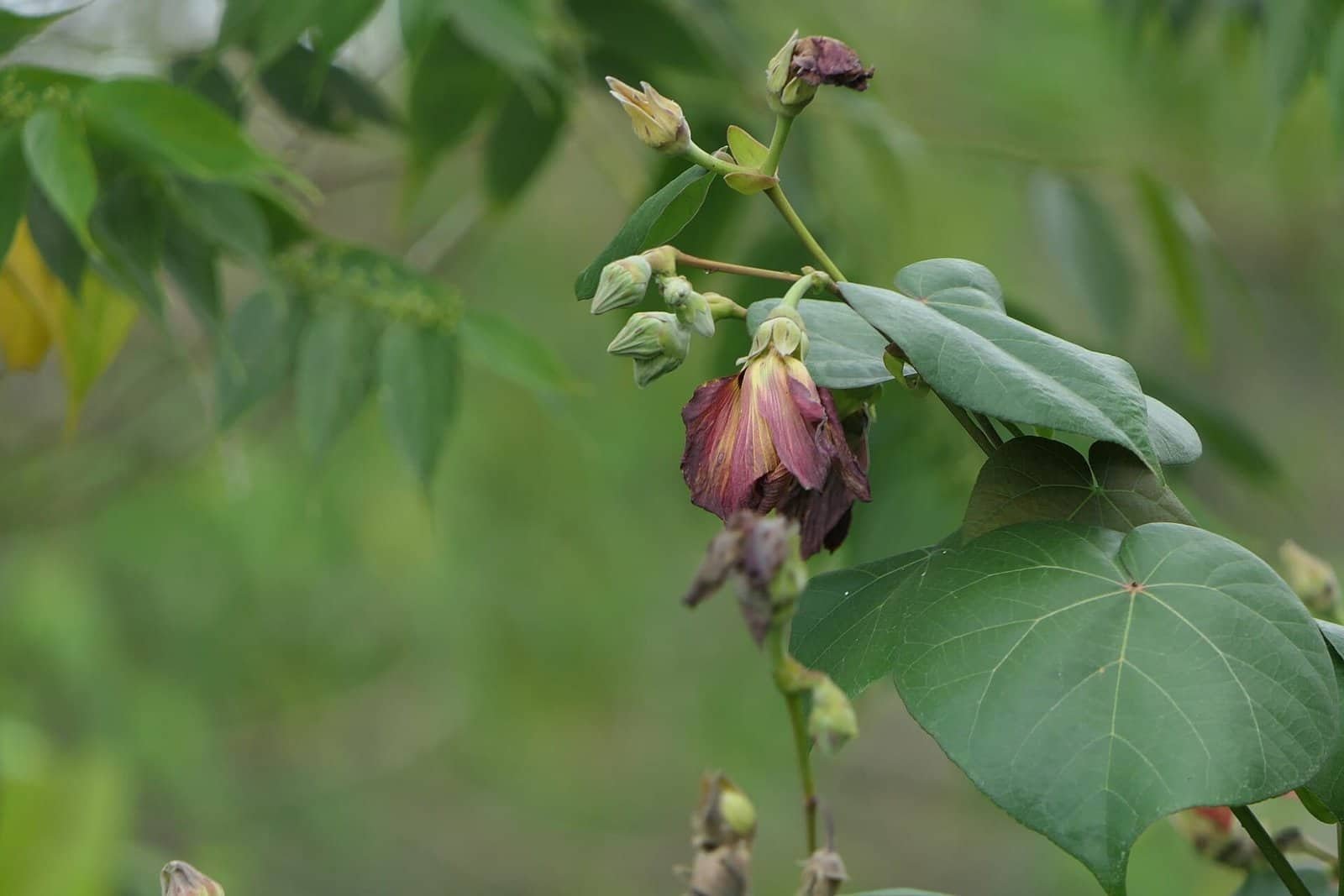
A low, spreading tree with branches that lean off sideways and often end up bowing toward the water. Its leaves are big hearts. The flower is yellow in the morning, with a dark center, and turns orange then red as the day goes on. A fallen bloom on the ground tells you the time of day.
The purau is, above all, fiber. The inner bark gives cords, ties, dance skirts. Its flowers were also used for dye. And its low shade, right at the water’s edge, is still one of the best places on the fenua to do nothing at all.
.jpg)
Tamanu
Also called ’ati
Calophyllum inophyllum
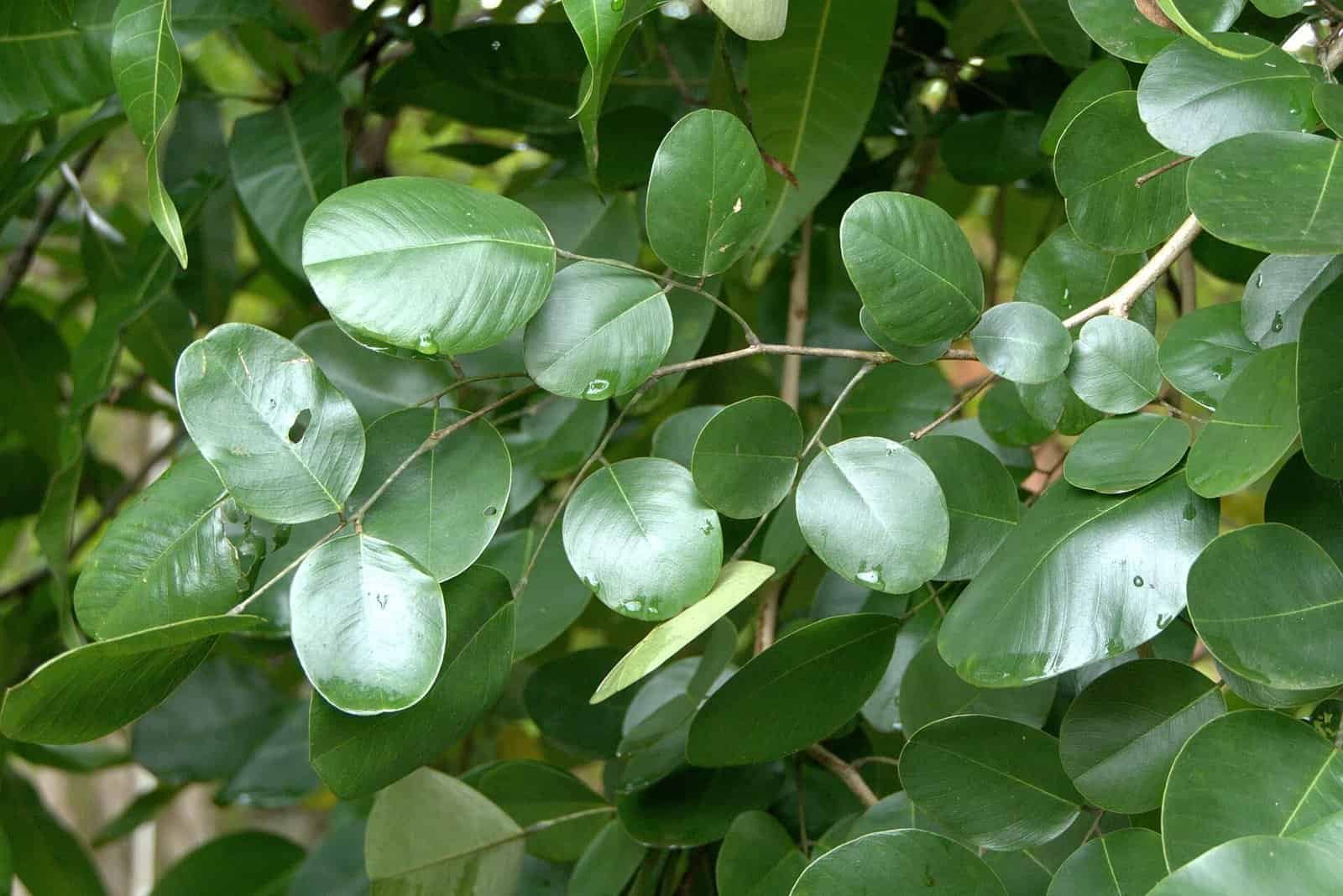
A massive, often twisted trunk, cracked bark, and thick, glossy, almost varnished leaves. The tamanu casts dense shade. You’ll often find it by the sea, leaning out over the sand.
It was a sacred tree. Its wood wasn’t used for just anything — it was kept for tiki and canoes. It was often planted inside the marae enclosures themselves.
Its nuts yield tamanu oil, green and thick, still used today to soothe skin, bites, small wounds. Plenty of families keep a bottle somewhere.
.jpg)
Aito
Ironwood, she-oak
Casuarina equisetifolia
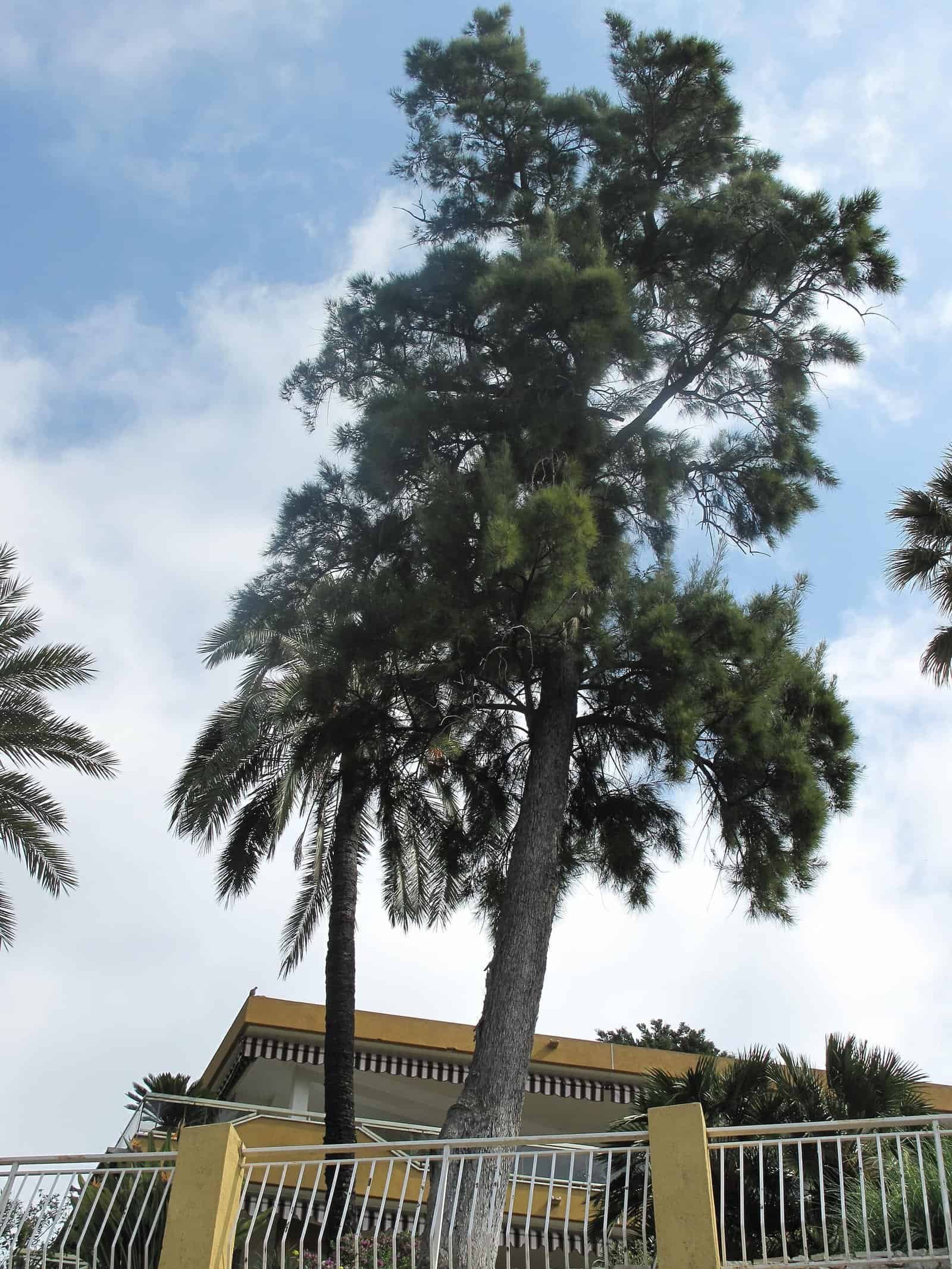
From a distance it looks like a pine. Up close it isn’t one: what you take for needles are very fine, jointed twigs. When the wind runs through it, the tree whistles. It’s a sound you don’t forget.
In reo Tahiti, ’aito means warrior. The name comes from its wood, which is extremely hard. It was made into war clubs, spears, tapa beaters, tiki, posts, objects of prestige.
The tree was planted around the marae: it was the emblem of ’Oro, the god of war. When you come across a row of them on a point, look around — there’s often something nearby. To understand these places: discover the marae of Polynesia.
Mape
Tahitian chestnut
Inocarpus fagifer
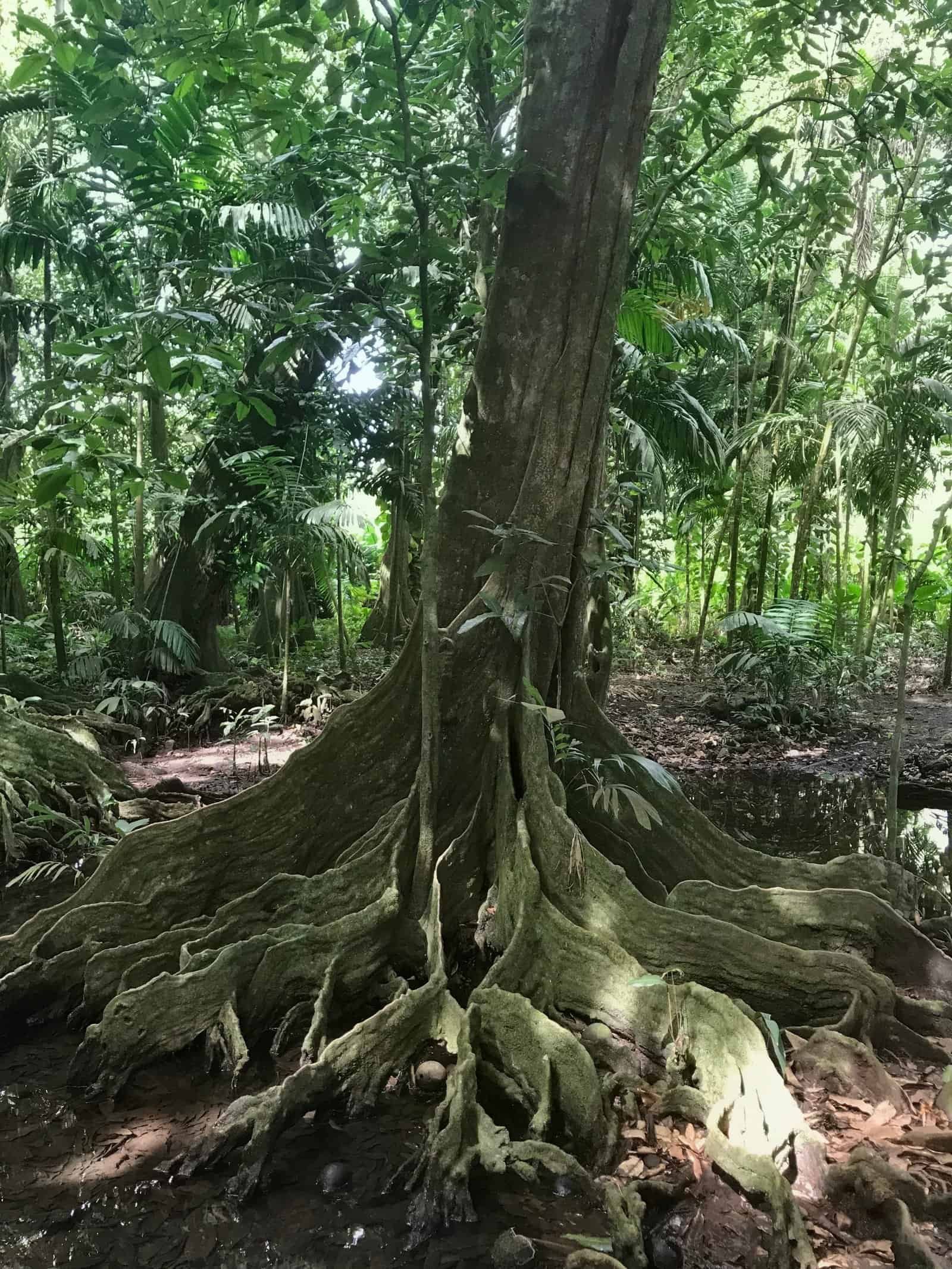
The mape looks like nothing else. Its trunk flares into broad fluted buttresses, rippled, almost carved, spreading across the ground like roots stood on end. Once you’ve seen it, you’ll know it anywhere.
It lives with its feet in the water, on valley floors, along rivers. It’s the tree of inland hikes, not of postcards. Its range says as much: it grows on the high islands, almost never on the atolls.
Its seed is eaten cooked — boiled or grilled — and really does taste like chestnut. It too came by canoe with the first migrations. To meet one, take the trail to the Faarūmai waterfalls.
Miro
Pacific rosewood
Thespesia populnea
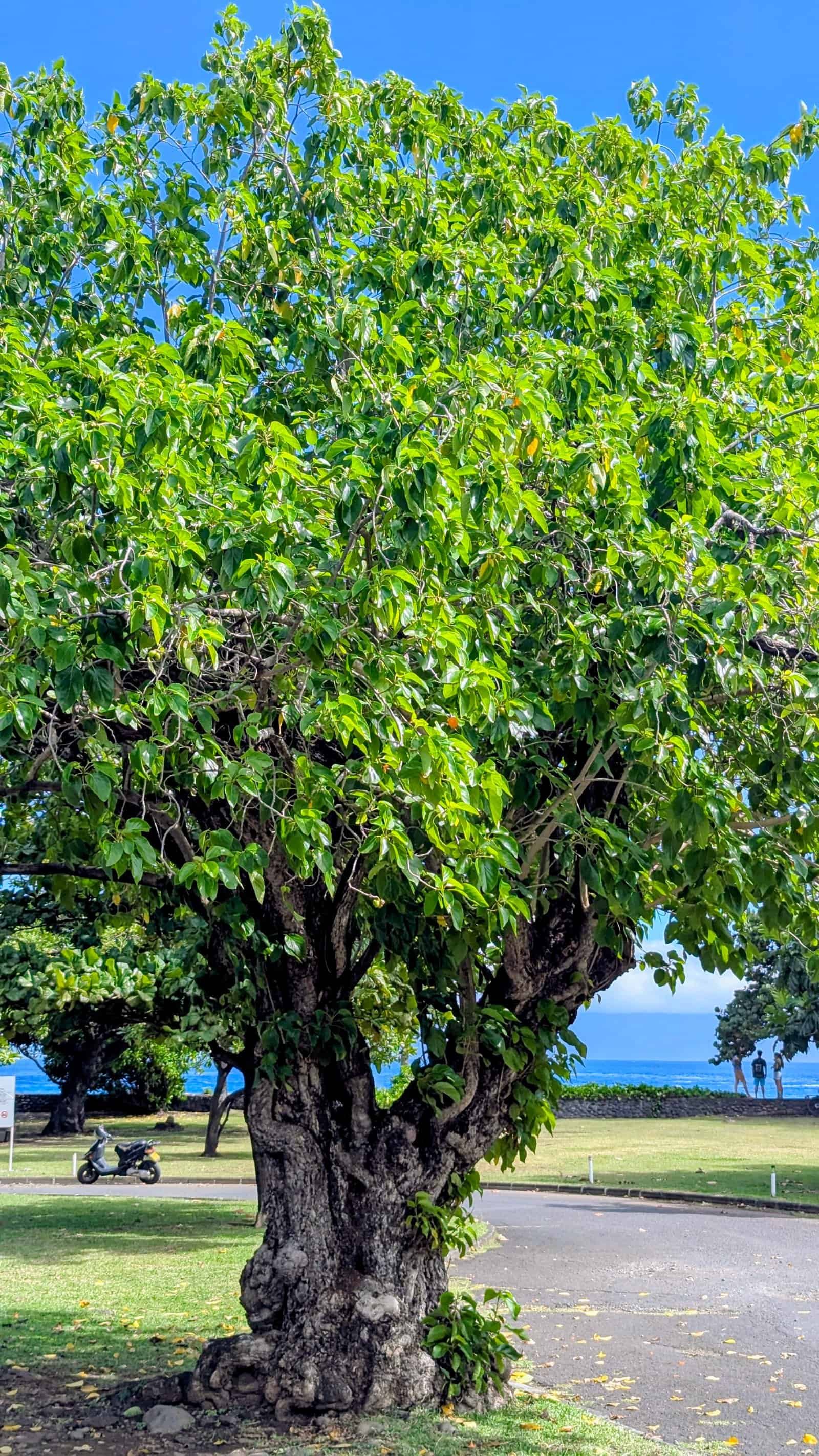
The miro is easily mistaken for the purau: same family, same heart-shaped leaves, same yellow flower that darkens through the hours. The difference is in the center of the flower — deep purple in the miro — and in its round, woody capsule that stays on the tree for a long time.
What makes it prized is the wood. Dark, dense, grained, it works and polishes beautifully. It’s the wood of bowls, platters, tiki, the carved pieces you’ll see in the craft markets — and worth laying a hand on before you buy.
Keep exploring
- The emblematic flowers of French Polynesia — the tiare, the pua, the ’aute and the rest.
- The great Tahitian legends — the stories where these trees appear.
- The marae of Polynesia — where the aito and the tamanu grow.
- The Faarūmai waterfalls — a valley to see the mape.
Reading about a tree is one thing. Standing under it is another. Valley hikes, marae visits, botanical walks with local guides of the fenua: discover and book your activities on Anoe.
Sources and credits
Reo Tahiti names, status and island distribution from the Nadeaud botanical database of the Herbarium of French Polynesia (Chevillotte H., Ollier C. & Meyer J.-Y., 2019). Scientific names and families verified in World Flora Online. Traditional uses after Tahiti Heritage.
Photographs under free license via Wikimedia Commons, except where noted. Credit shown under each image.

About the author
Ruben Chang is passionate about his homeland, his fenua, the sounds and stories that move him. Creator of tahiti-agenda.com in 2007 and front-end developer for the REDSOYU agency, he explores the cultures, technologies and stories that link the islands on a daily basis.