


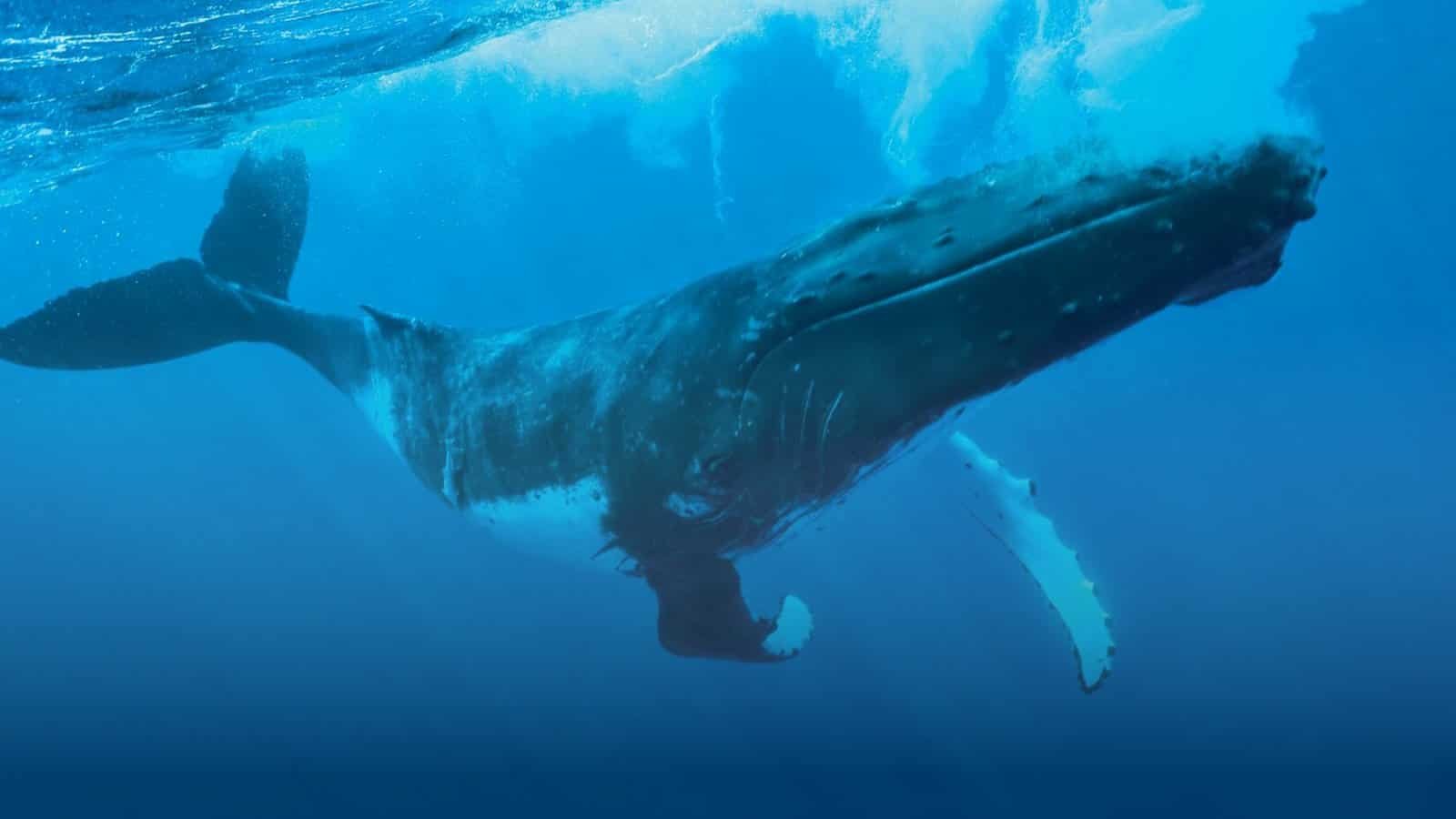
Whale Watching in French Polynesia: the 2026 season begins on july 20
Each year, from July to November, the giants of the ocean leave the cold waters of the south.
They come seeking warmth, calm, life.
On July 20, 2026, the humpback whale season in Tahiti and the islands officially begins.
And with it, a promise: a rare moment of wonder and respect.
Polynesia, sanctuary of humpback whales
They travel thousands of kilometers, from Antarctica.
Their destination: the sheltered lagoons of our islands.
Humpback whales in the Pacific come here to give birth and nurse their calves.
In bays, passes, and warm waters (21–27°C), they pause, they teach, they protect.
Locally, they are called Tohora in Tahiti, To’ora in the Australs, Paraoa in the Tuamotu, Pa’aoa in the Marquesas, and Mago Puitai in the Gambier.
Names that remind us these beings are more than visitors — they are part of the story.
Dolphins in Moorea and beyond
Polynesian waters are also home to nearly a dozen dolphin species:
→ bottlenose dolphins,
→ long-beaked dolphins,
→ pilot whales…
Each species has its habits.
Some stay offshore, others enter the lagoons.
It’s not uncommon during a whale watching tour in French Polynesia to see dolphins playing at the bow of the boat.
But remember — it’s always their choice.
Their approach, like that of whales, must be gentle and respectful.
Rules for responsible marine mammal watching
The protection of whales in Tahiti and throughout the territory is governed by the Environmental Code.
Every encounter must respect the animals and their natural rhythm.
Observation Zones to Respect:
Safety Zone (15 m): no access allowed — for anyone.
Exclusion Zone (100 m): no boats allowed.
Observation Zone (300 m): reserved for authorized tour operators (max. 3 boats per cetacean).
Whale watching inside lagoons, bays, or passes is strictly prohibited.
Getting closer, without disturbing
On any guided whale watching trip in Polynesia, the following rules apply:
Keep speed below 3 knots within the 300 m zone
Never cut across the animals’ path
Do not encircle them or block them near reefs
Keep the engine in neutral if they approach
Observe for 15 minutes max (less if a calf is present)
No swimming or use of sonar
Never place your boat between a mother and her calf
This responsible approach to marine mammals preserves harmony between humans and ocean giants.
Stricter regulations in 2026
Since 2025, the protection of marine mammals in French Polynesia has been governed by tightened rules, with more checks at sea:
Water entry reserved for accredited guides: a maximum of 6 people in the water, accompanied by a certified guide.
A maximum of 3 boats around the same cetacean at any one time.
Every approach must be declared through the official mobile app reserved for authorized operators.
Private boaters and individuals are not allowed to approach whales.
Authorizations are mandatory
Whale watching in French Polynesia is regulated: only authorized operators may take guests to observe whales. For the 2026 season, around 92 operators are licensed across 9 islands.
Areas where authorization applies:
Tahiti, Moorea, Huahine, Raiatea, Taha’a, Bora Bora, Rurutu, Tubuai, Tetiaroa
Allowed hours: 7:30 AM – 5:30 PM
Season: July 20 to November 20, 2026
Apply via: www.paraoa.gov.pf
Water entries are allowed (outside the exclusion zone) for up to 6 people in the water, accompanied by a certified guide.
To witness, not to disturb
To see a whale is to witness something timeless.
A moment you may not capture on camera, but one that stays with you.
Whale watching in French Polynesia is not a safari.
It is a meeting.
And every true meeting must be earned.
By respecting them, you help them return —
again and again —
and carry their story forward.
Operators authorized to observe whales
The list of licensed operators is updated each season by the Directorate of the Environment (DIREN). Before booking a tour, always check that the operator appears on the official list currently in force.
👉 View the official list of authorized operators for the 2026 season on the PARAOA portal — paraoa.gov.pf (Directorate of the Environment of French Polynesia).

About the author
Ruben Chang is passionate about his homeland, his fenua, the sounds and stories that move him. Creator of tahiti-agenda.com in 2007 and front-end developer for the REDSOYU agency, he explores the cultures, technologies and stories that link the islands on a daily basis.