


French Polynesia is one of the largest marine sanctuaries in the world. With coral reefs, legendary passes, vertiginous drop-offs, and exceptional encounters with marine wildlife, each island offers a unique diving experience.
Whether you are a beginner diver, an experienced diver or simply a fan of snorkeling, here is an overview of the diving spots in Tahiti and the islands.

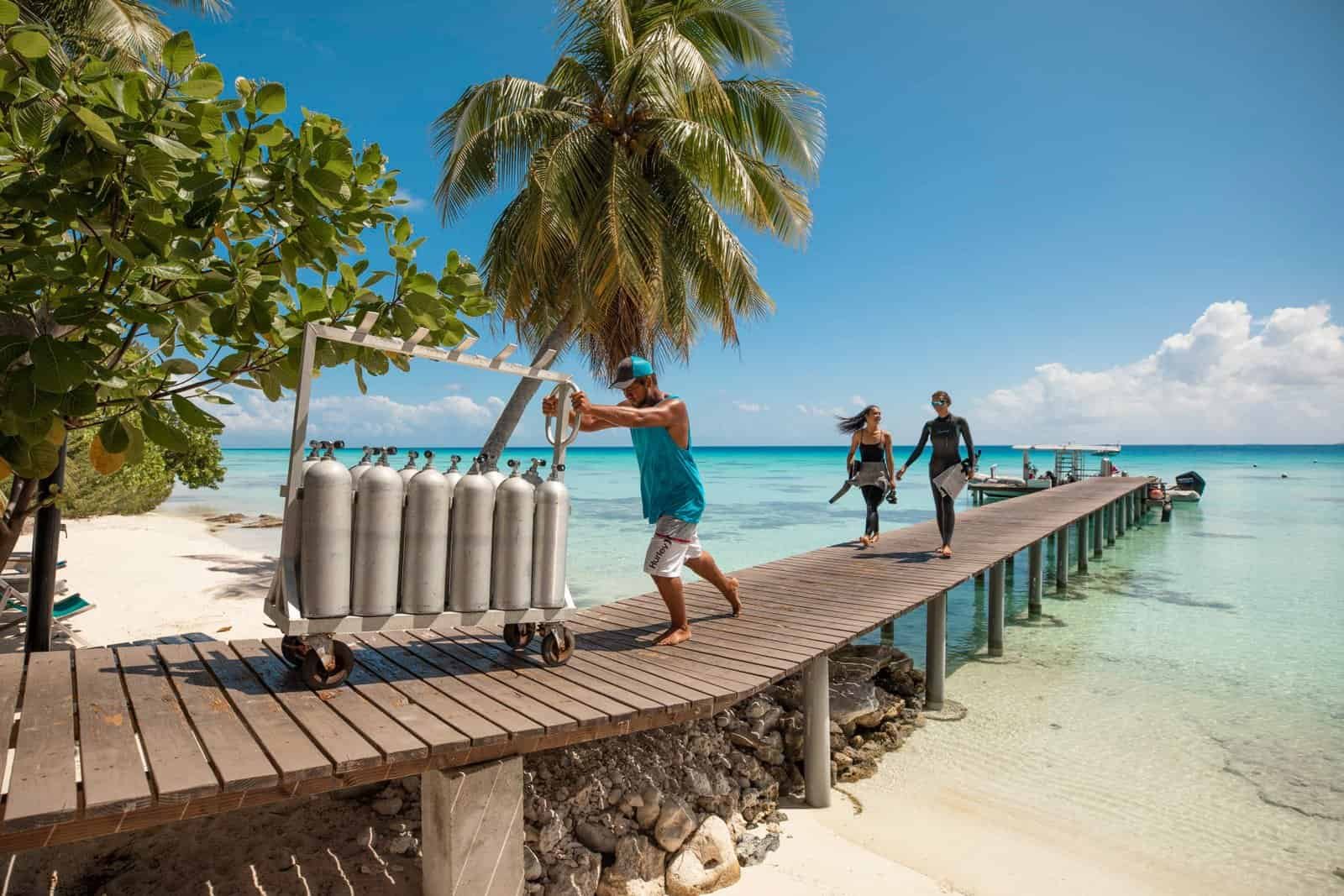

Why dive in Tahiti and the islands?
If you’ve never explored Polynesian seabeds before, get ready for a real visual shock.
The water is warm all year round (between 26 and 30°C), visibility is often exceptional (up to 30 or even 40 meters), and marine life is simply incredible.
But what makes diving here even more special are the local instructors. Passionate, caring, always smiling, they share much more than safety instructions: they pass on a respectful vision of the ocean, deeply rooted in Polynesian culture.
Here, diving isn’t just about admiring fish. It’s about feeling the energy of the Fenua, that deep connection between sea and land.
Diving in Tahiti: between reefs and shipwrecks
Tahiti is often underestimated for diving… and yet. Its volcanic seabeds offer a great diversity of landscapes.
My favorite dive spots in Tahiti
The Aquarium
Perfect for a first dive or even snorkeling. Shallow (5 to 12 meters), calm and colorful, it’s a true feast for the eyes.
The 3 Wrecks
Diving here feels a bit like visiting an underwater museum! Three wrecks rest on the lagoon floor (two boats and a seaplane). The atmosphere is fascinating, almost mystical.
The Spring
This is my favorite spot for a relaxing immersion. Here, turtles drift with the current and come to rest on the corals, surrounded by anemones and clownfish. If you want to enjoy the show in complete peace, this is the perfect place.
White Valley
Looking for thrills? This is where it happens! This offshore spot is home to blacktip sharks, lemon sharks, giant trevallies, and leopard rays. Here, adrenaline is guaranteed—always with respect and observation.
Moorea: sharks, rays, and turquoise lagoons
Just a few minutes from Tahiti, Moorea is a world reference for encounters with large marine animals.
I love diving in the Opunohu and Tiahura passes, where you regularly encounter blacktip sharks, stingrays, and sometimes even leopard rays.
The coral gardens are perfect for snorkeling or shallow dives, with incredible light.
👉 Ideal for first dives and underwater photography.
Rangiroa: the legend of the passes
Rangiroa is a myth for divers from all over the world. Here, diving follows the rhythm of the currents.
The Tiputa Pass is spectacular: playful dolphins, grey sharks, hammerheads, Napoleon wrasse…
The Avatoru Pass, more technical, offers intense and lively drift dives.
👉 A spot I recommend for intermediate to advanced divers.
Fakarava: UNESCO-listed biosphere reserve diving
Fakarava is an ecological sanctuary of raw beauty, renowned for its pristine ecosystems.
The South Pass (Tetamanu) is world-famous for its impressive wall of grey sharks.
Lagoon dives, meanwhile, offer untouched corals and exceptional light.
👉 Perfect for experienced divers and nature lovers.
When to dive in Polynesia?
- ✅ All year round: excellent visibility (20 to 40 m)
- 🐋 July to October: humpback whales present (depending on the islands)
- 🌴 April to November: ideal conditions in the Tuamotu
Responsible and committed diving
French Polynesia actively protects its lagoons, and as divers, we also have a role to play.
✔️ Choose a spot suited to your level so you feel comfortable and can fully enjoy the dive.
✔️ Gear up properly: a well-fitted mask and a comfortable wetsuit make all the difference!
✔️ Respect marine life and flora: look with your eyes, admire without disturbing.
✔️ Dive with a local guide: they know the best spots and will teach you plenty about marine life.



About the author
Kulani Brown is passionate about travel and cultures, especially that of her native Polynesia. As community manager for the REDSOYU agency, she uses her creativity to share the stories, landscapes, and traditions that make her fenua so rich.