


Discover the Marae of Polynesia: A Journey to the Heart of Ma’ohi Culture
Imagine yourself treading upon sacred ground, where the whispers of ancestors still echo. In French Polynesia, and particularly in Tahiti and its surrounding islands, marae are much more than mere archaeological remains. They are portals to a rich and complex past—places where history and spirituality meet. Are you ready to dive into the soul of ma’ohi culture?
What is a Marae?
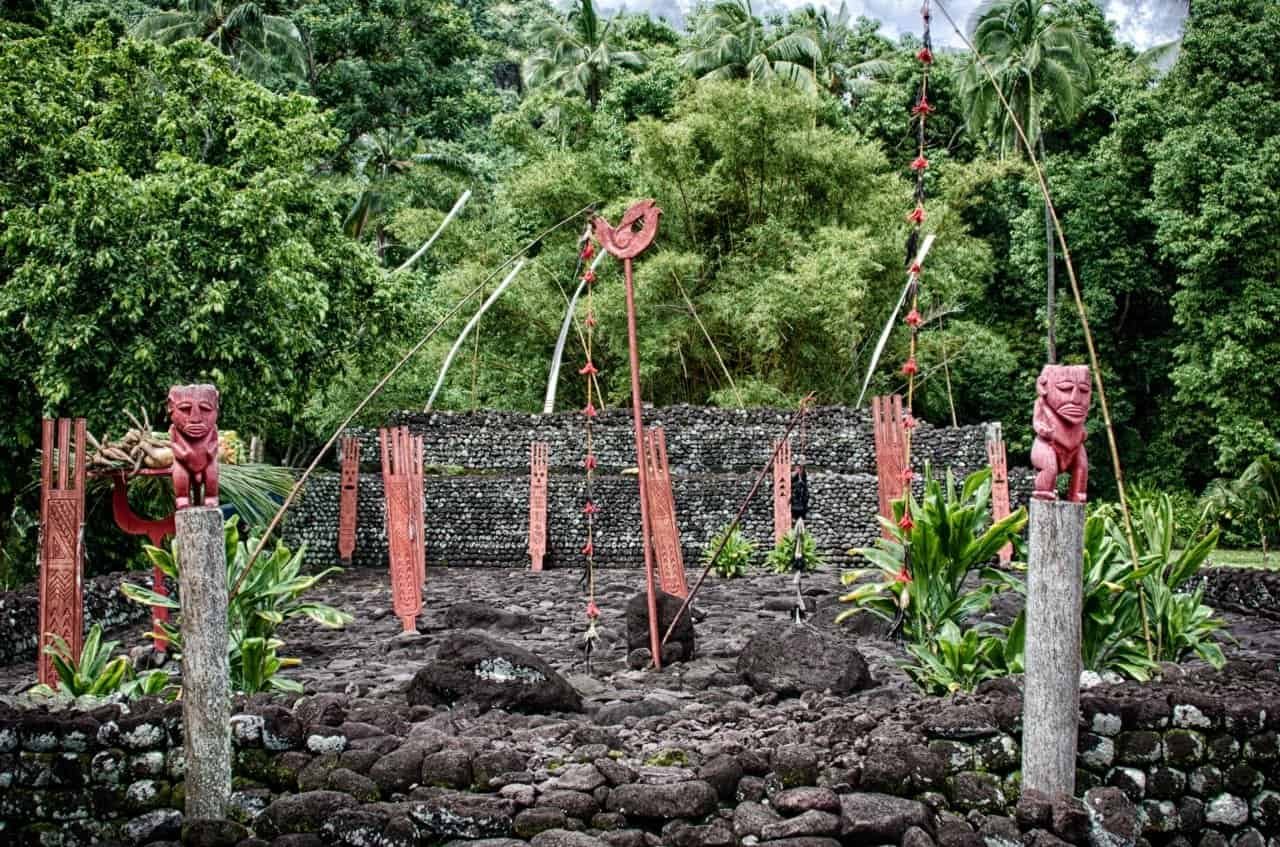
A marae [mah-rah-eh] is a sacred Polynesian site, a center for social, political, and religious gatherings. It was the beating heart of the community, where important ceremonies, investitures, offerings to the gods, and celebrations of life took place. These ceremonial platforms were seats of power and points of connection with the spiritual world.
- Marae are characterized by their paepae, paved platforms made of stone or coral, often rectangular, which served as the foundation for sacred structures.
- One can also find unu, carved red wooden boards representing ancestors and deities.
Marae in Tahiti and the Society Islands
While the marae of Taputapuātea is the most iconic and the largest, Tahiti and the other Society Islands are home to many more modest but equally fascinating marae. Often hidden within lush vegetation, these sites bear witness to the richness of Polynesian cultural heritage.
- Marae Mahaiatea in Tahiti: Featuring a stepped pyramid unique in Polynesia, this marae impresses with its bold architecture.
- Marae Arahurahu in Paea: Carefully restored, this site offers an immersive look into ancestral rituals and ceremonies.
- Island Marae: Every island has its own marae, often linked to the specific history of its clans and chiefs.
Marae Taputapuātea in Raiatea: The Sacred Cradle of Polynesian Culture
Located on the island of Raiatea—the first Marae of Polynesia—Taputapuātea is considered one of the most sacred sites in all of Polynesia. For centuries, this vast ceremonial complex was a major religious, political, and cultural hub where priests, chiefs, and navigators from across the Pacific gathered. Great ceremonies dedicated to ʻOro, the god of war and navigation, were held here, cementing the site’s spiritual prestige.
Taputapuātea was also a center for navigation and the transmission of knowledge. Expeditions set sail from Raiatea (known as Hava’i during the era of the Ari’i) to other archipelagos, helping to culturally link the islands of Polynesia. This central role is why the site was inscribed as a UNESCO World Heritage site in 2017: it stands as a testament to the vast cultural and maritime network that united Polynesian societies.
There is a powerful symbol associated with Taputapuātea: the sacred octopus, called Fe‘e Nui (fe’e means octopus in reo tahiti). In certain traditions and oral histories, the octopus represents the common origin and spiritual connection between the Polynesian islands, reaching far beyond the Polynesian Triangle to Hawaii, Aotearoa (New Zealand), and Rapa Nui, encompassing every archipelago within.
In this symbolic vision, the head of the octopus rests at Raiatea, at Taputapuātea, while its tentacles stretch out to the various islands of Polynesia and the Pacific. This image expresses the idea that this marae was a radiating spiritual center from which navigation routes, cultural exchanges, and alliances between chiefdoms originated.
Respect and Etiquette: How to Visit a Marae
Visiting a marae is an enriching experience, but it must be done with respect for local traditions and beliefs.
- Adopt a respectful attitude: It is strictly forbidden to walk on the paepae or touch the sacred stones. On a marae, everything is sacred: the stones, the earth, the trees, the flowers, the leaves, and even the fish (the sacred space often extends into the sea as far as the reef pass). Therefore, nothing should be picked, broken, or degraded.
- Prioritize guided tours: Local guides can provide invaluable information and share their passion for their culture.
Prepare Your Journey to the Heart of Polynesia
So, are you ready to explore the marae of French Polynesia? Whether you are a history buff, a culture enthusiast, or simply seeking an authentic experience, you won’t be disappointed. Tahiti and her islands open their arms to reveal their treasures.
For an unforgettable trip, visit the Museum of Tahiti and the Islands in Puna’auia, which explains the settlement of the Pacific starting from Raiatea.

À propos de l’auteure
Brune Vazquez, directrice artistique et rédactrice pour l’agence REDSOYU.